The History of Arendals Dampskibsselskab AS

ADS Maritime Holding Plc is located in Arendal, Norway, from where it has been operating since its foundation in 1857

1857

A Steamship Company is Born

In the autumn of 1856, shipowners Emil Kallevig and Julius Stephansen sent out an invitation to establish a steamship company in Arendal. The aim was to improve the city’s communications, and the founders were candid that the venture was unlikely to yield much profit in its early years. Share subscriptions came in slowly, and it was only after neighbouring towns also contributed capital that sufficient funds were raised. On 9 March 1857, Arendals Dampskibsselskab was formally constituted with a share capital of 8,750 Speciedaler. Julius Stephansen, Emil Kallevig and Peter L. Lund were elected to the board.

Arendal was at the time flourishing as one of Norway’s most prosperous maritime cities, with the largest merchant fleet in the country. ADS was born out of these proud traditions – as well as the dramatic transition from sailing ships to steam power that was transforming shipping across the world.

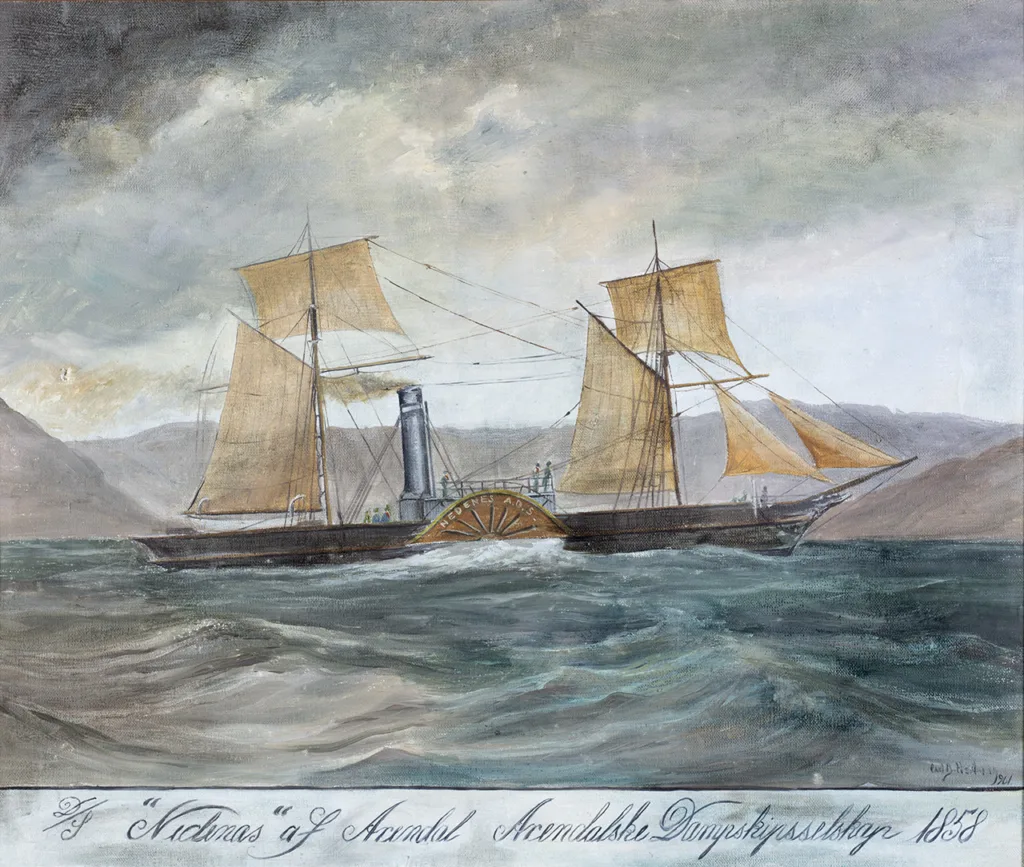
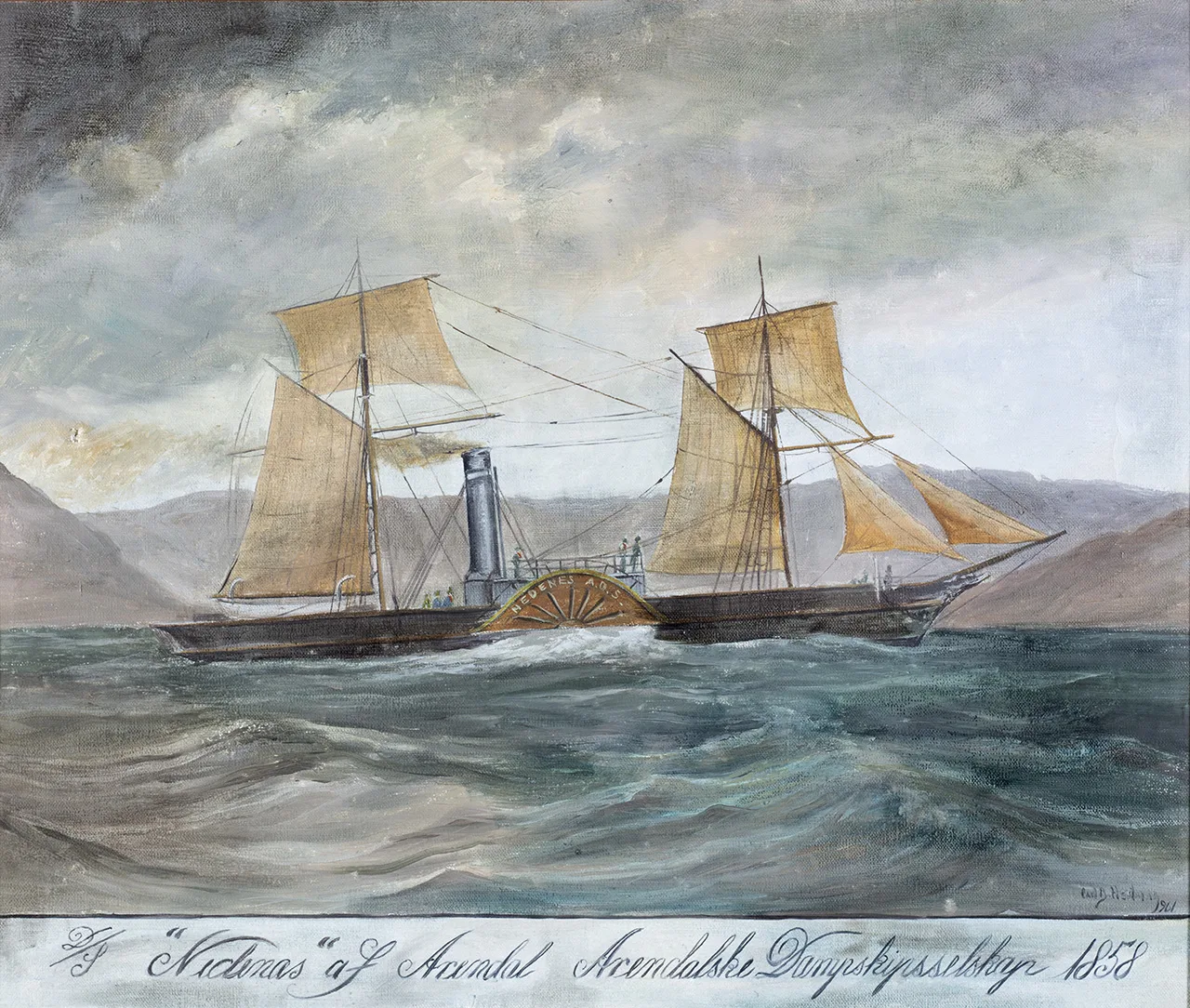
SS Nedenæs was ADS first ship.
1858

The Paddle Steamer SS Nedenæs

ADS’ first vessel was the paddle-wheel steamer SS Nedenæs, built by Albert Tischbein in Rostock, Germany. Named after the county, she was an iron-hulled vessel of 33.5 kommerselester (commercial lasts), equipped with a steam engine and paddle wheels. Despite her modest size, she had a small cargo hold, a saloon and cabins for passengers.

Under Captain Ole Nicolay Hiis, the ship arrived in Arendal on 2 July 1858 to great excitement – the city finally had its own steamship. After a trial trip to Grimstad the next day, she headed to Oslo for final adjustments at Nyland’s Mechanical Workshop. She was put into service between Kragerø and Mandal, and on Sundays – when she was not in scheduled service – Nedenæs offered pleasure cruises along the coast and through the archipelago, which attracted many passengers; travelling by steamship was something of an event in those days.

During the winter months she proved her worth on the longer route to Oslo, when sailing ships were hampered by ice. However, the ship proved to be rather poorly built and required constant repairs. She was sold in 1864 to the Parafin-Olie Compagniet in Mandal, and later sank after grounding off Farsund in 1866. Despite the challenges, the six years of operation had yielded a total surplus of 13,546 Speciedaler – a return of 12 per cent annually, an encouraging result that prompted the shareholders to continue.
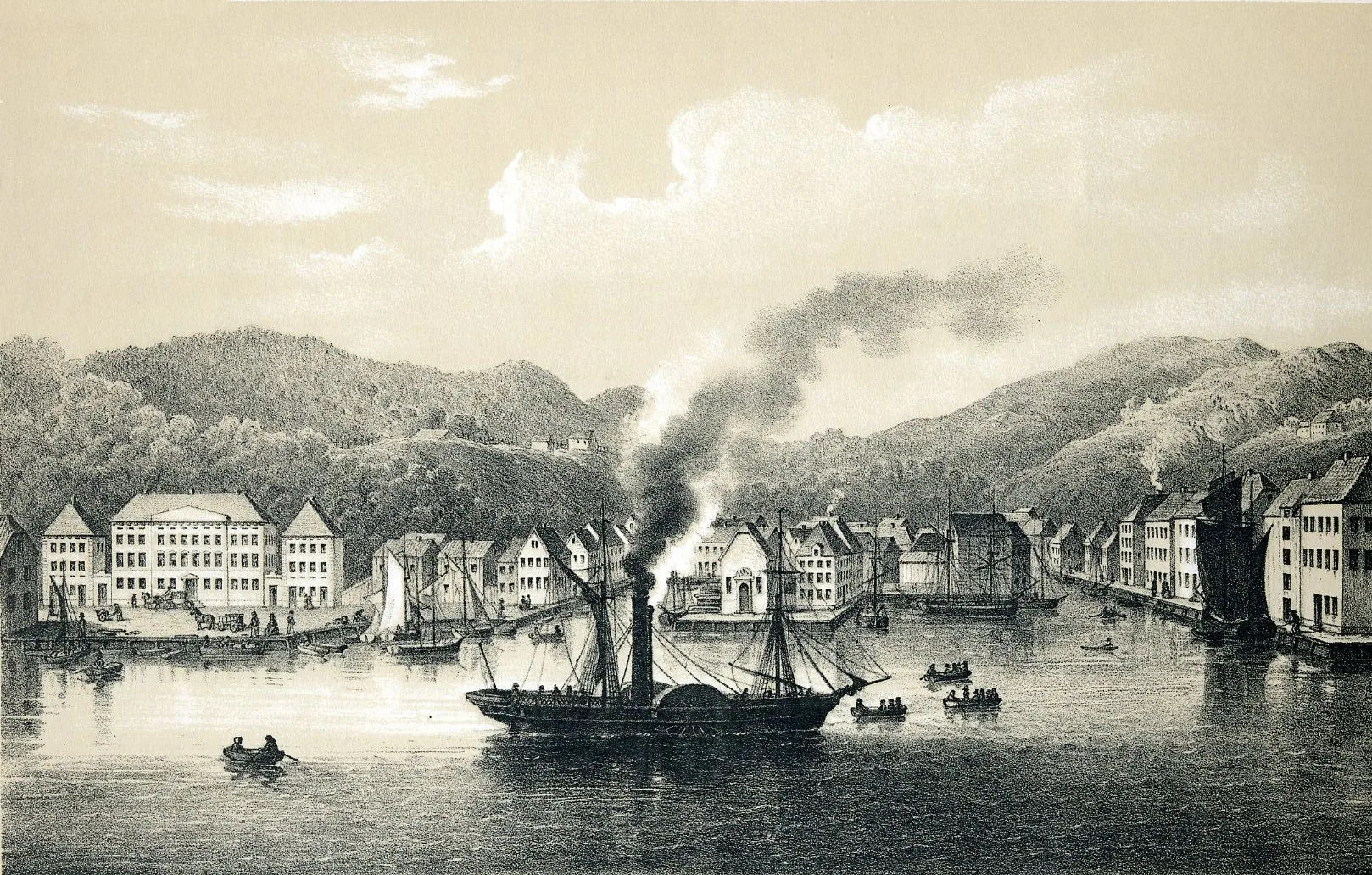
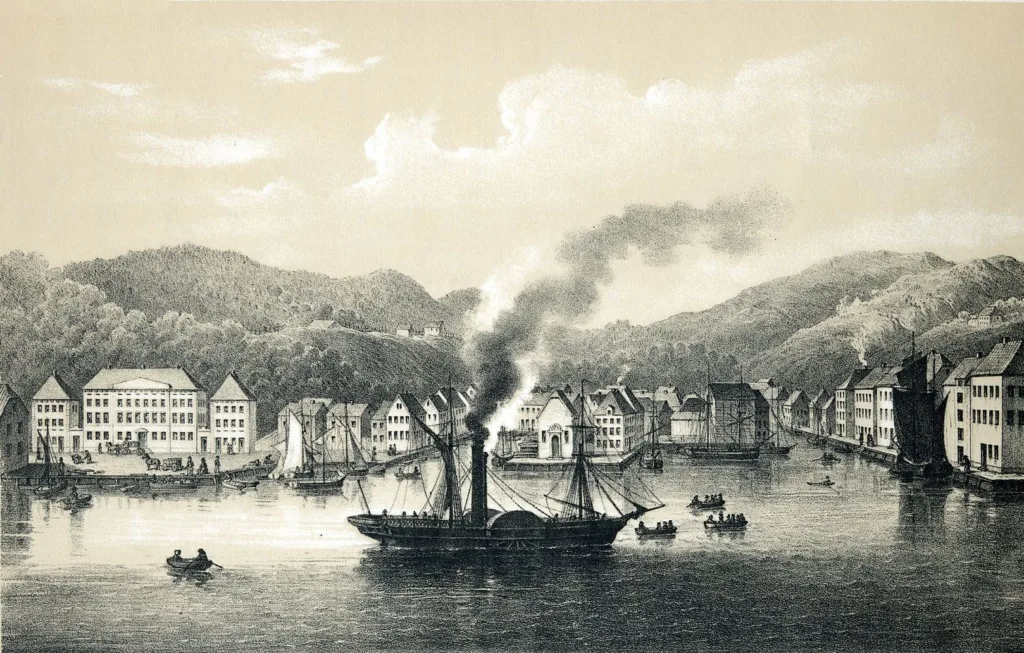
No known photographs of SS Nedenæs exist.
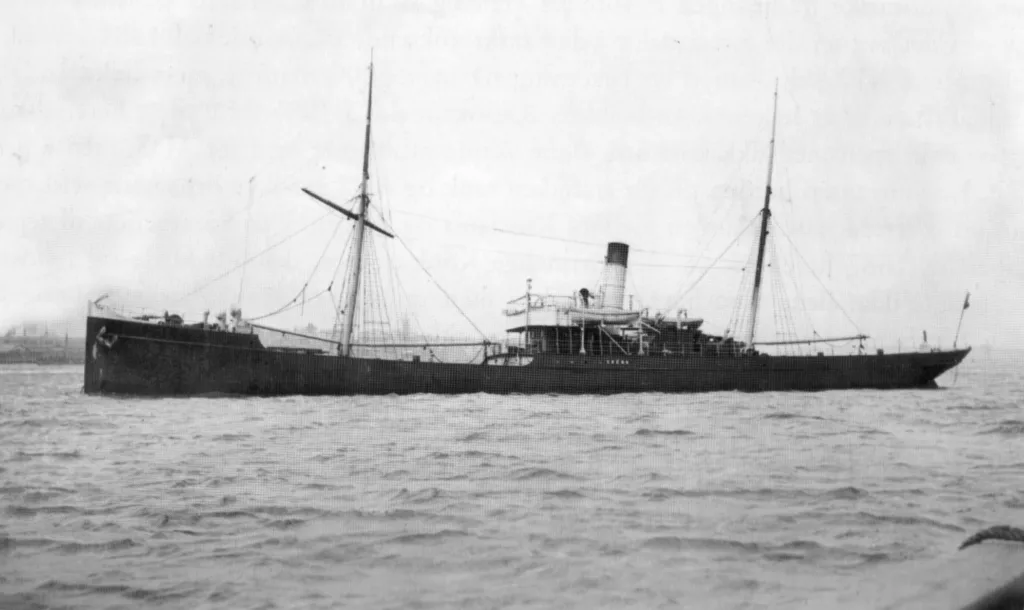
SS Arendal (the first) was also known as The Norwegian Icebreaker
1865

SS Arendal and the Coastal Route

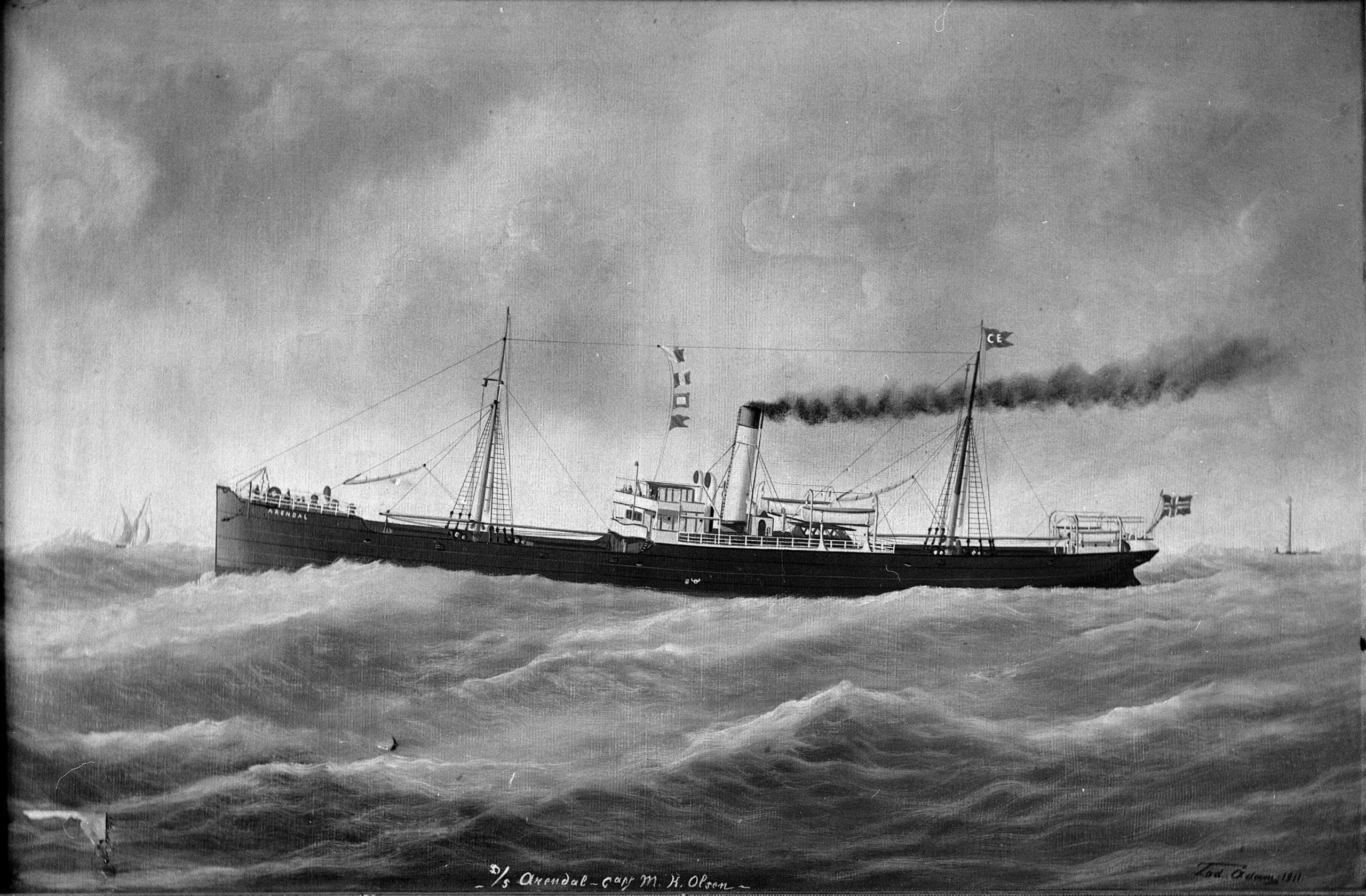
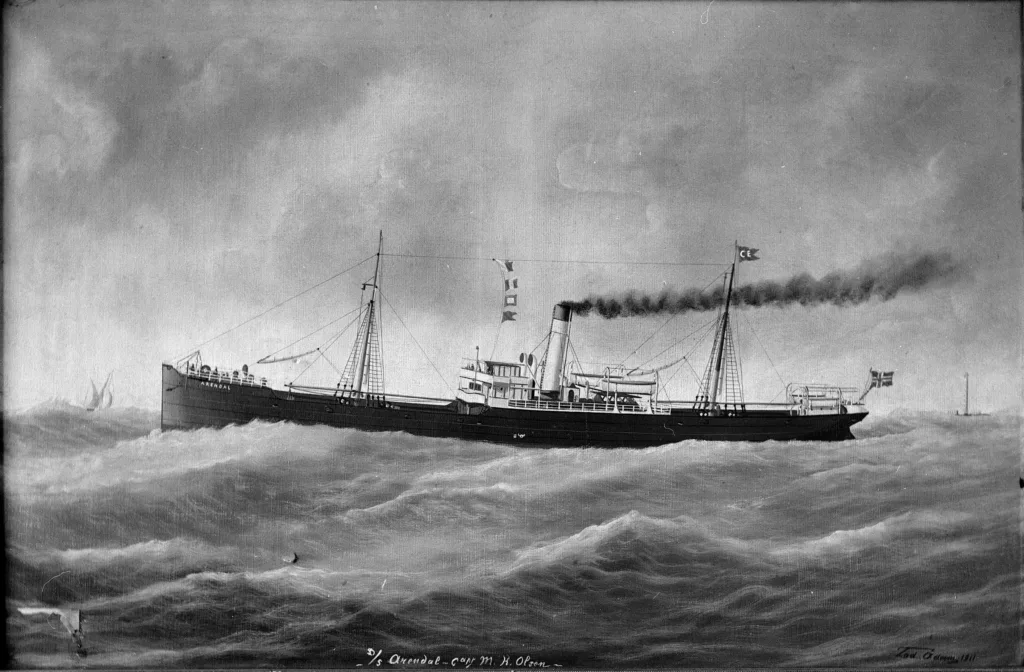
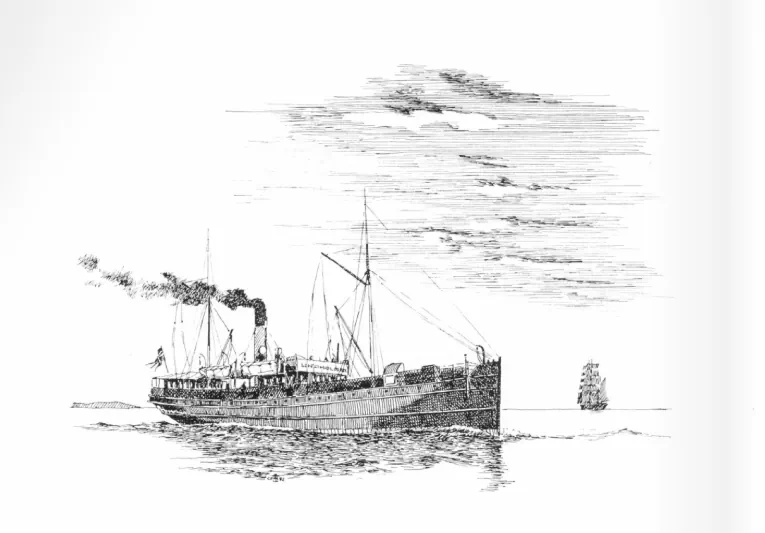
The shareholders dissolved the original partnership and formed a new company – also named Arendals Dampskibsselskab – with the ambition to move from local services to proper coastal shipping. A new screw steamer was ordered from Motala Mekaniska Verkstads AB at their Lindholmen yard in Gothenburg. SS Arendal was delivered in June 1865 – approximately 200 gross tons with a speed of 10 knots, cargo capacity of 4,000 cubic feet, and berths for 18 passengers. Crucially, the hull was reinforced for sailing in ice – and it was the winter trade that proved most profitable, when competitors laid up their ships. At the handover, the shipyard characterised the vessel as “the Norwegian icebreaker”.

On Midsummer’s Eve 1865, Arendal departed Oslo on her maiden voyage westbound to Bergen with calls at numerous ports, establishing the coastal route that would become the backbone of ADS operations for over a century. The first year yielded a handsome 20 per cent dividend.

SS Arendal was sold to Ålesund in 1877. A skipper and merchant in Risøyhavn in Vesterålen, Richard With, travelled to Ålesund and purchased the vessel, renaming her Vesteraalen. He then founded Vesteraalens Dampskibsselskab – the company that would go on to launch the legendary Hurtigruten coastal express in 1893. With various conversions including a diesel engine in 1952, the former ADS ship continued trading until scrapped in 1971 – a lifespan of over a century.

SS Arendal (the first) was also known as The Norwegian Icebreaker
1868

Expansion on the Bergen Route

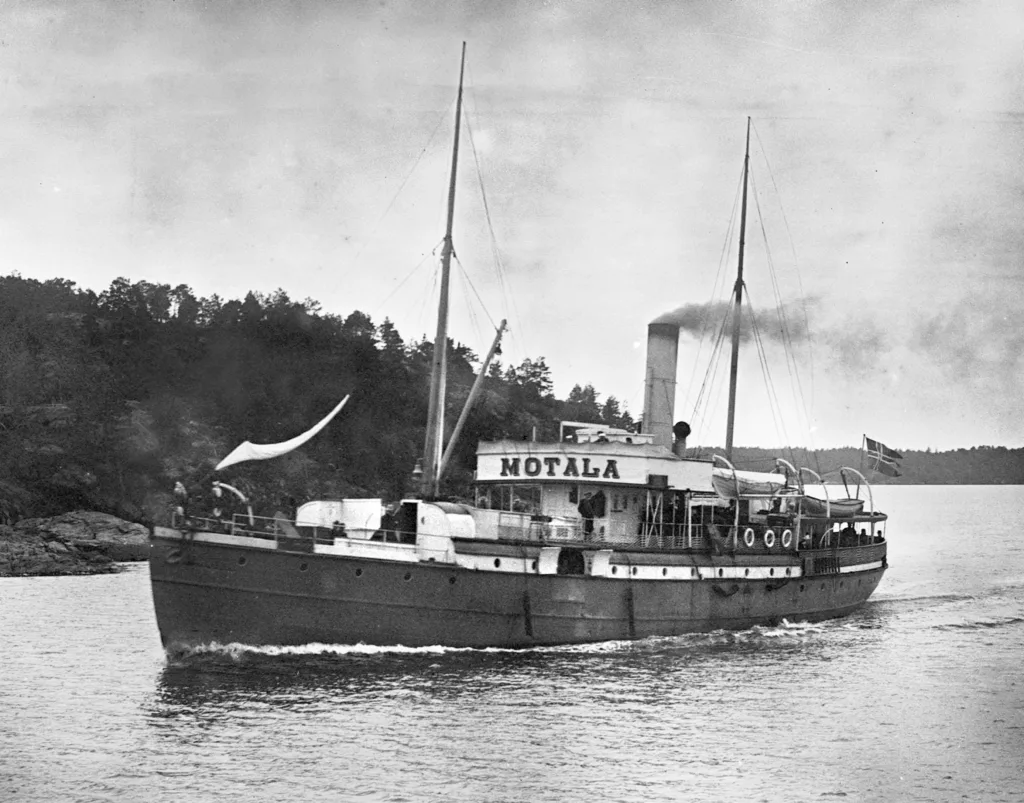
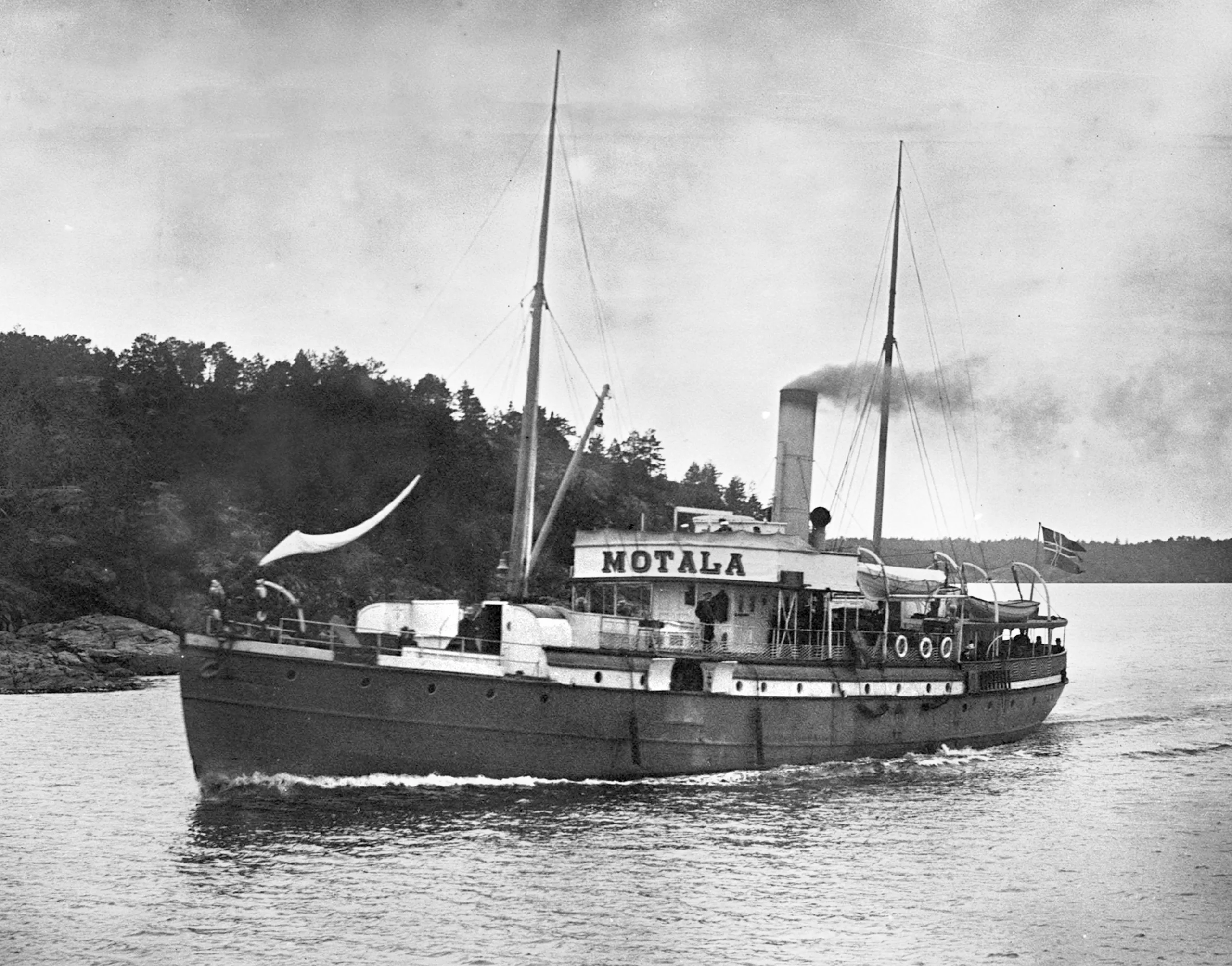
The success with Arendal led to further growth. In 1868, a new and larger vessel was delivered: SS Motala, at 335 gross tons with berths for 52 passengers and cargo capacity of 8,000 cubic feet. With both Arendal and Motala in service, ADS could offer year-round weekly sailings between Oslo and Bergen – establishing what was effectively a hundred-year coastal express route between the country’s two largest cities.

A third vessel, SS Lindholmen, followed in 1878 from the same Gothenburg yard. At 421 gross tons, she represented the modern full-deck coastal steamer, with a capacity for 390 passengers and cargo room of 12,000 cubic feet.

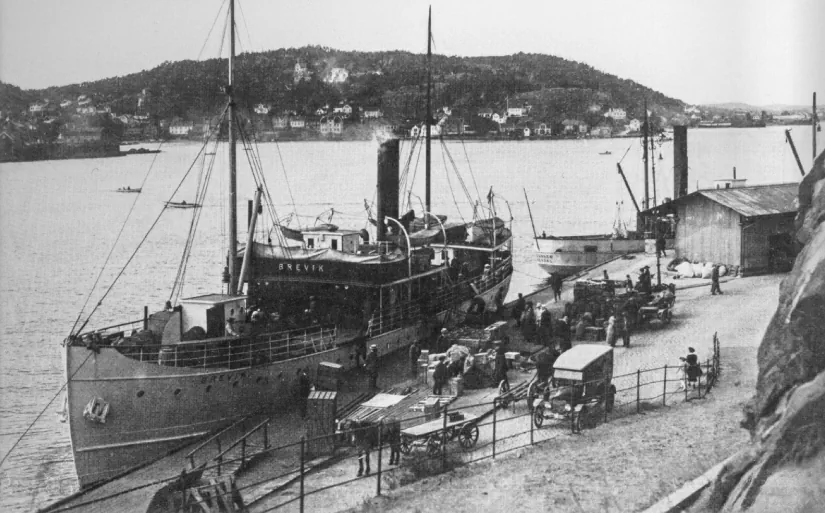
SS Motala was renamed SS Brevik in 1912
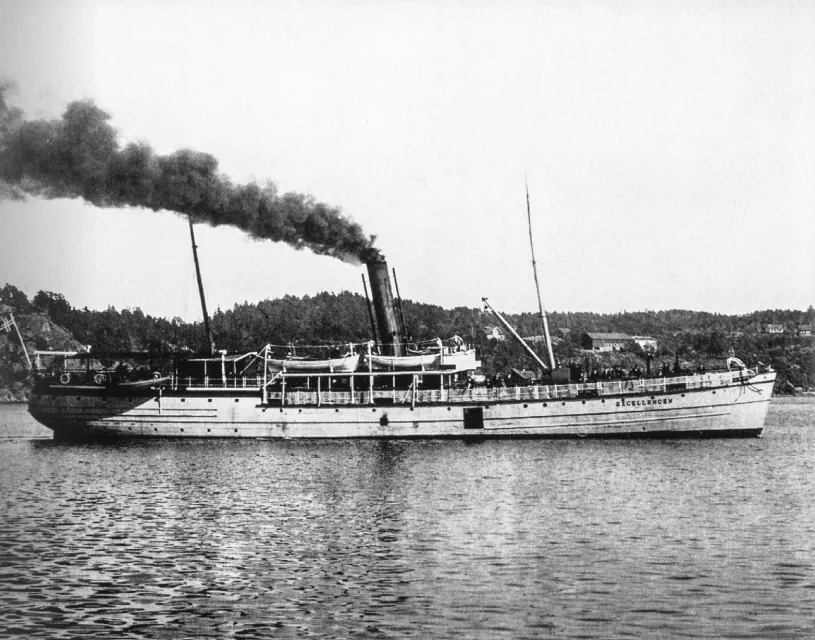
SS Excellencen
1886

Surviving the Arendal Crisis

The 1880s brought difficult times. The generally favourable Norwegian economy of the 1870s gave way to harder conditions, and in the autumn of 1886 Arendal was struck by a devastating financial crisis. Several banks, ship owners and merchants were forced to stop trading, bringing ruin to broad segments of the community and severely weakening the company’s traffic base.

ADS was deeply affected. Insurance on the ships was cancelled, wages for officers and crew were cut, and the company’s shares fell to between 25 and 50 per cent of par value. Interests in Oslo began buying up shares with the aim of seizing control. The board issued a circular urging shareholders not to sell. Two years later, the shares were written down from 400 to 300 kroner, and new capital was raised.
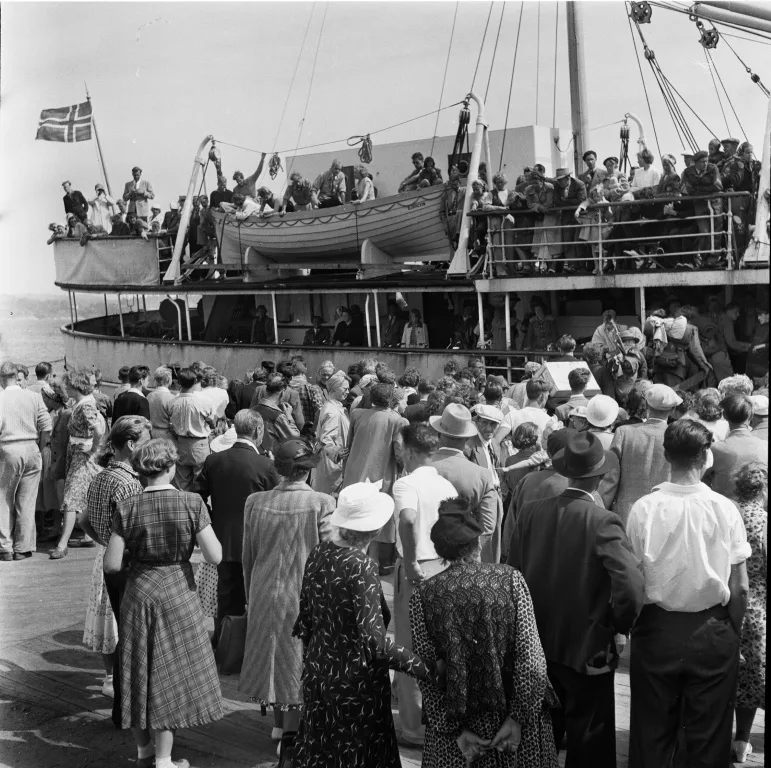
The competing shipping companies on the Bergen route also recognised that ruinous competition would destroy them all. In 1888, a landmark cooperation agreement was reached: ADS and Det Stavangerske Dampskibsselskab joined forces with a common postal contract, shared passenger and cargo rates, and coordinated timetables – offering up to six weekly round trips in summer and three in winter. This partnership would endure for the entire remaining life of the coastal route.
SS Excellencen
1891

International Ambitions – SS Spero

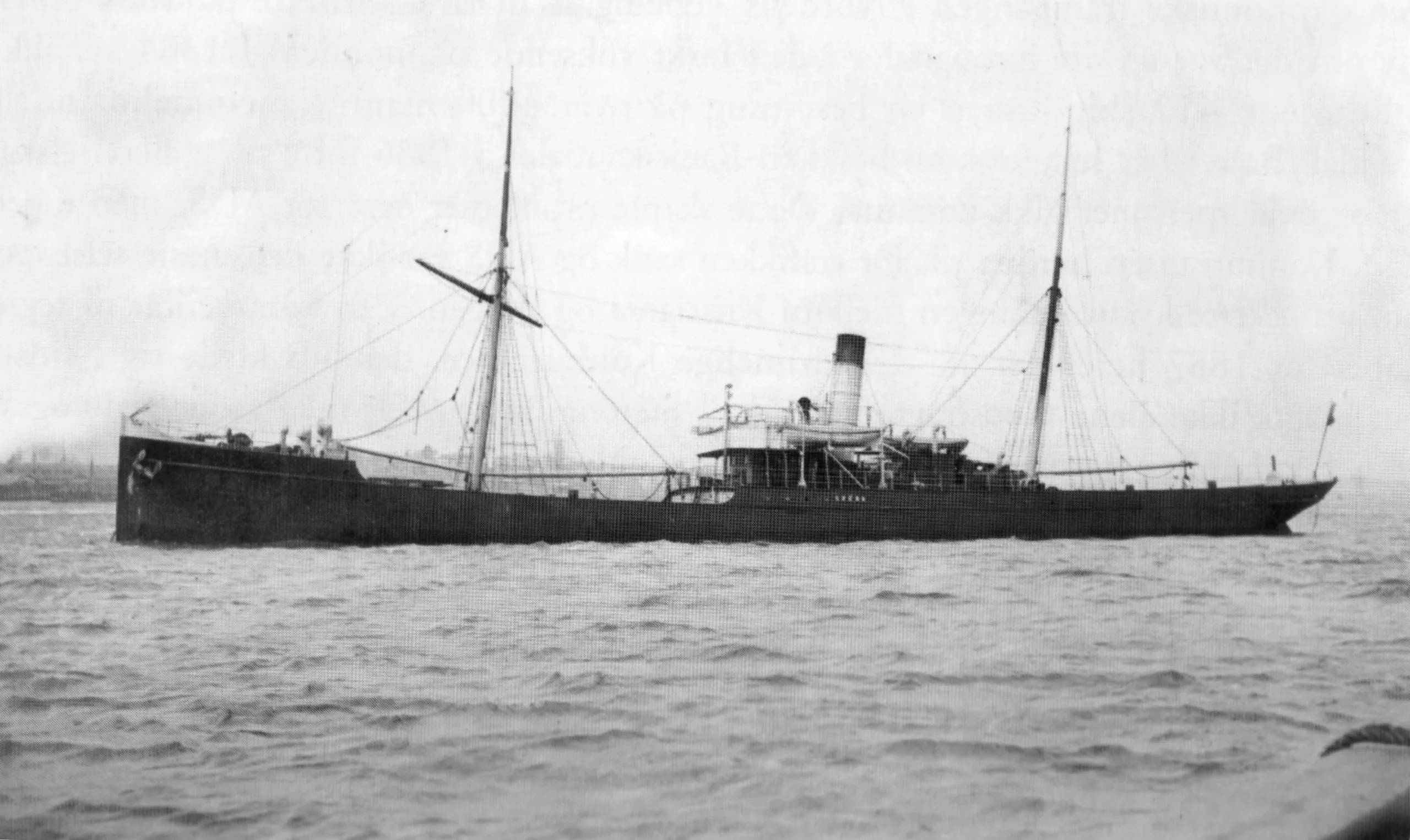
A boom in the late 1880s encouraged ADS to try its hand at international trade. The share capital was increased to 675,000 kroner and a cargo steamer was ordered from Nyland’s Mechanical Workshop in Oslo. Delivered in 1891 under the name Spero (987 gross tons), the ship was among the few modern steamers in Arendal’s great fleet.
In 1894, Spero was chartered for a remarkable voyage from Liverpool to Iquitos, Peru. Navigation on the Amazon had only been opened around 1890, and the river was serviced by smaller river boats. Spero became the first ocean-going vessel ever to reach Iquitos – some 3,000 kilometres up the Amazon at 350 feet above sea level. The long river journey was completed without incident, a pioneering achievement that Spero carried out. The ship later pioneered the fruit trade between the West Indies and the United States, but the venture into foreign trade never proved particularly profitable. After 16 years in service, the average annual return was only about 6 per cent of the building cost. Spero was sold in 1907.

SS Spero
SS Spero
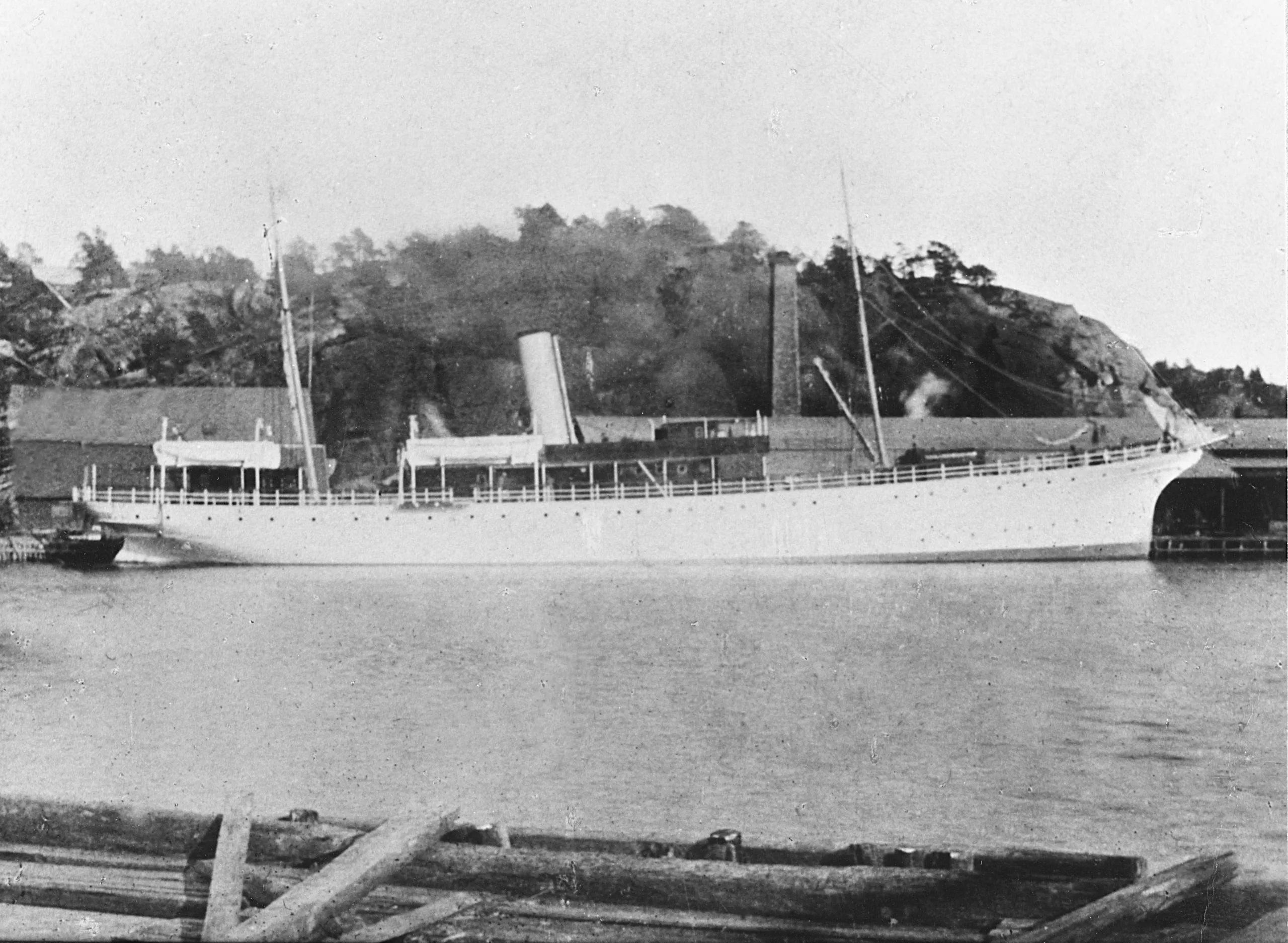
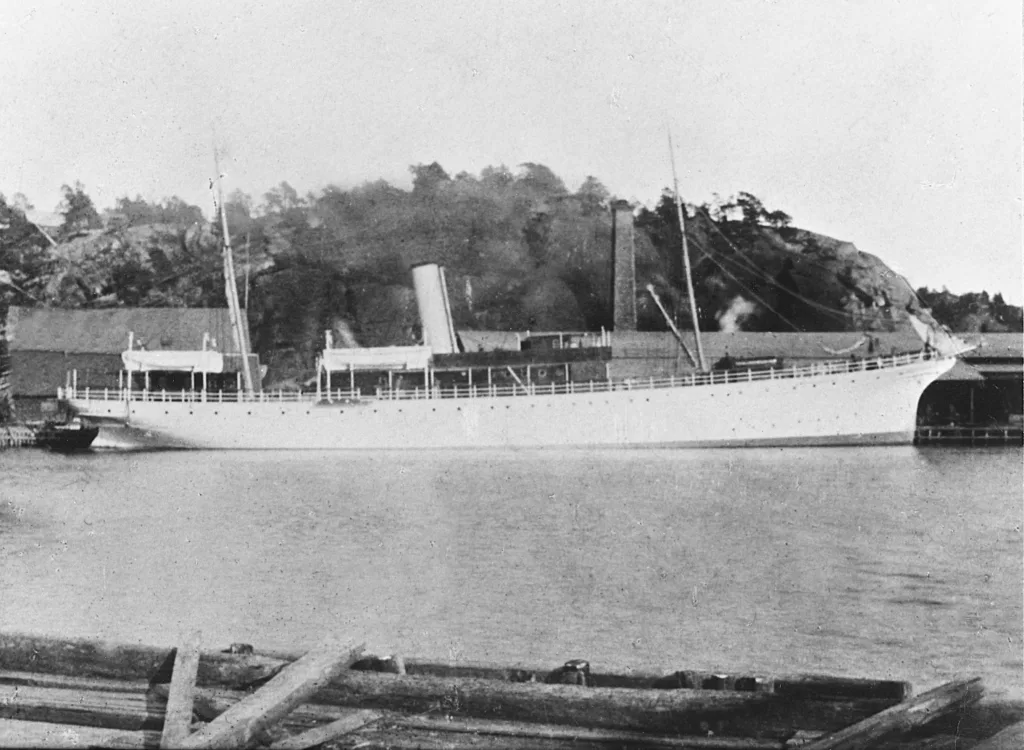
SS Dronningen at Fevigs Jernskibsbyggeri
1894

The Queen of the Southern Coast

To meet growing traffic on the Bergen route, ADS ordered a new ship from Fevig’s Iron Shipyard near Arendal in 1893. SS Dronningen (661 gross tons) was delivered in June 1894 – and she may well have been the most beautiful vessel ever to sail in scheduled service on the southern coast of Norway. Designed by the nationally acclaimed ship constructor Randulf Hansen, she had the graceful lines of a yacht, with a clipper bow, raking masts and funnel. Her white hull and yellow funnel became the ADS hallmark, and Dronningen served as the fleet’s flagship for decades.

She remained in ADS service until sold to Det Helgelandske Dampskibsselskab in 1940. In 1948 she was sold to Greece and renamed Ionion, continuing to trade between Greek islands until scrapped in 1962. Quality and longevity defined the ships of that era.

SS Dronningen at Fevigs Jernskibsbyggeri
1904

SS Kong Oscar II and the Night Express

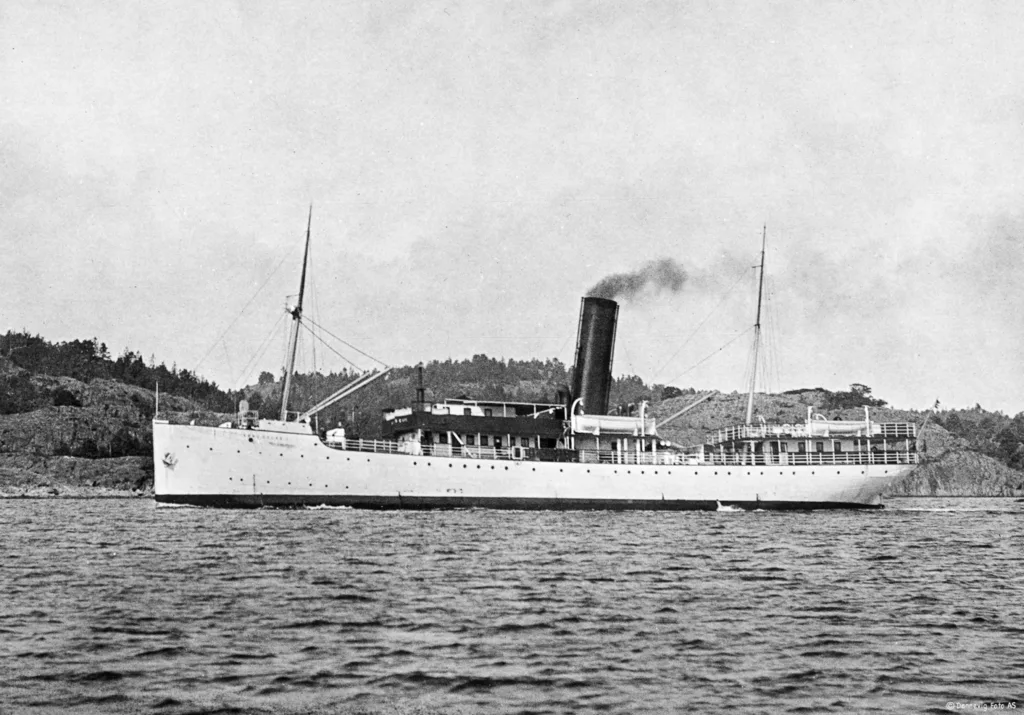
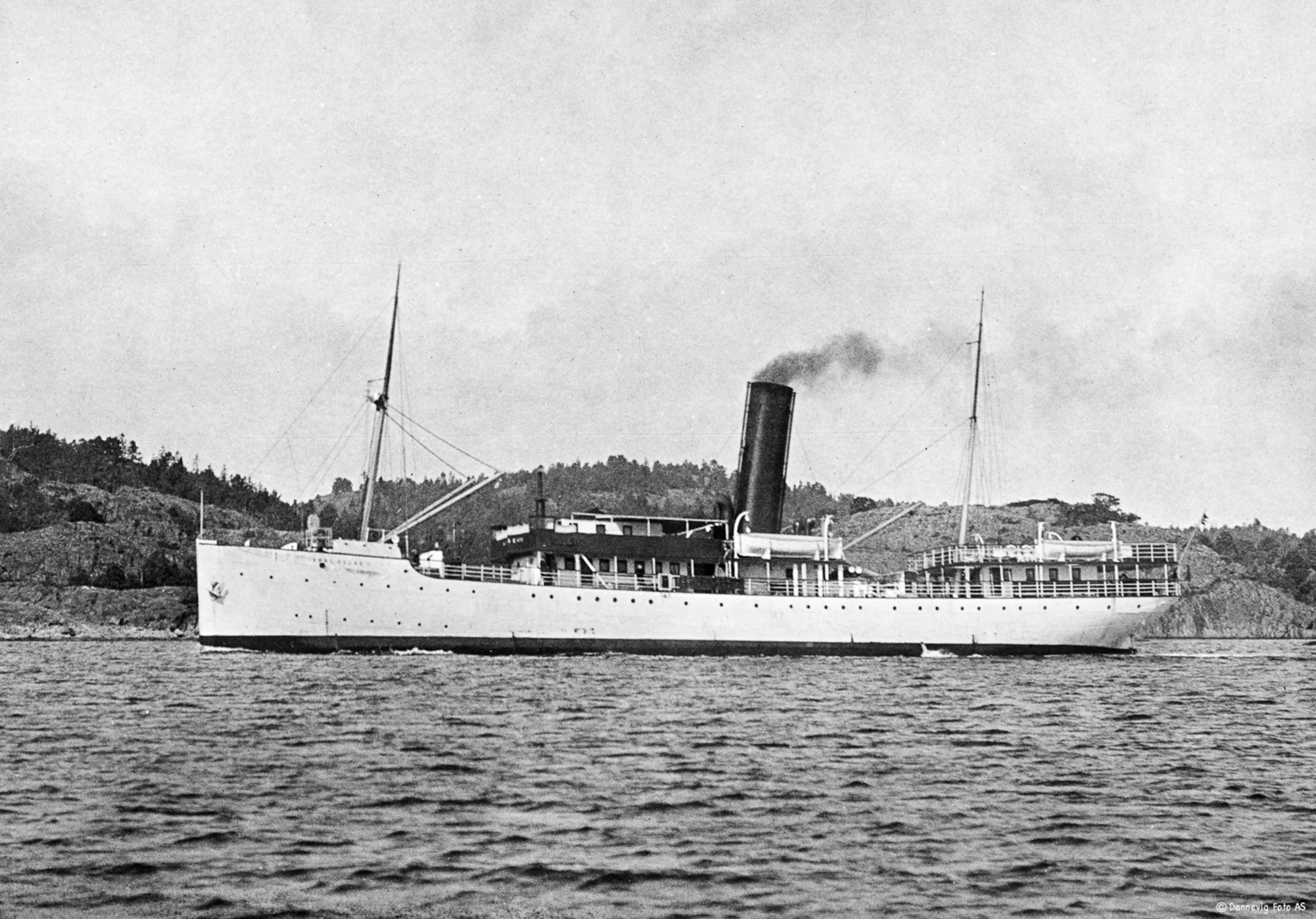
In 1904, ADS took delivery of its largest and most impressive coastal liner: SS Kong Oscar II (914 gross tons), built by Burmeister & Wain in Copenhagen at a cost of 458,000 kroner. With her powerful funnel and white hull, she was one of the finest ships of her generation. The choice of name – honouring the union king – reflected the more conservative and pro-union sentiment on Sørlandet, just one year before the union with Sweden was dissolved.

That same year, ADS also launched the Night Express (Hurtigruten) between Arendal and Oslo, using the freed-up SS Excellensen. Departing Arendal at 7 pm with calls at Lyngør, Risør, Kragerø and Moss, passengers could sleep their way to Oslo, arriving at 8 am. The service also enabled fresh fish, berries, meat and produce from Sørlandet to reach the capital’s markets within 12–14 hours of loading.

SS Kong Oscar II
SS Kong Oscar II
SS Lindholmen
1907

Fire at Sea – The Loss of SS Lindholmen

On 3 January 1907, SS Lindholmen caught fire off Lista while sailing in rough weather on the westbound coastal route. The fire spread rapidly in the harsh conditions. Captain Bjørnsen managed to beach the vessel, and without the crew’s extraordinary efforts the losses would have been far greater – but four lives were tragically lost. A replacement vessel, SS Norge (793 gross tons), was ordered from Fevig’s Iron Shipyard, but the yard went bankrupt during construction. The ship was completed by Fredrikstad Mechanical Workshop and delivered in 1910. Norge would serve under the ADS flag until 1960.

Around this time, the long-serving director C.H. Johnsen retired due to health reasons, and Navy Captain Halvor Løvold was appointed as the new managing director on 1 July 1907. Under his strong leadership, ADS would enter its most successful period.

SS Lindholmen
1920s

Golden Years – Peak of the Coastal Era

The period between the two world wars represented “the golden years” in the company’s history. Both tonnage and financial strength were at their peak. From 1918, ADS paid an annual dividend of 15 per cent, later reduced to 10 per cent from 1928. In 1922, the company established a pension fund for its officers and office staff, transferring 350,000 kroner – a very substantial sum at the time.

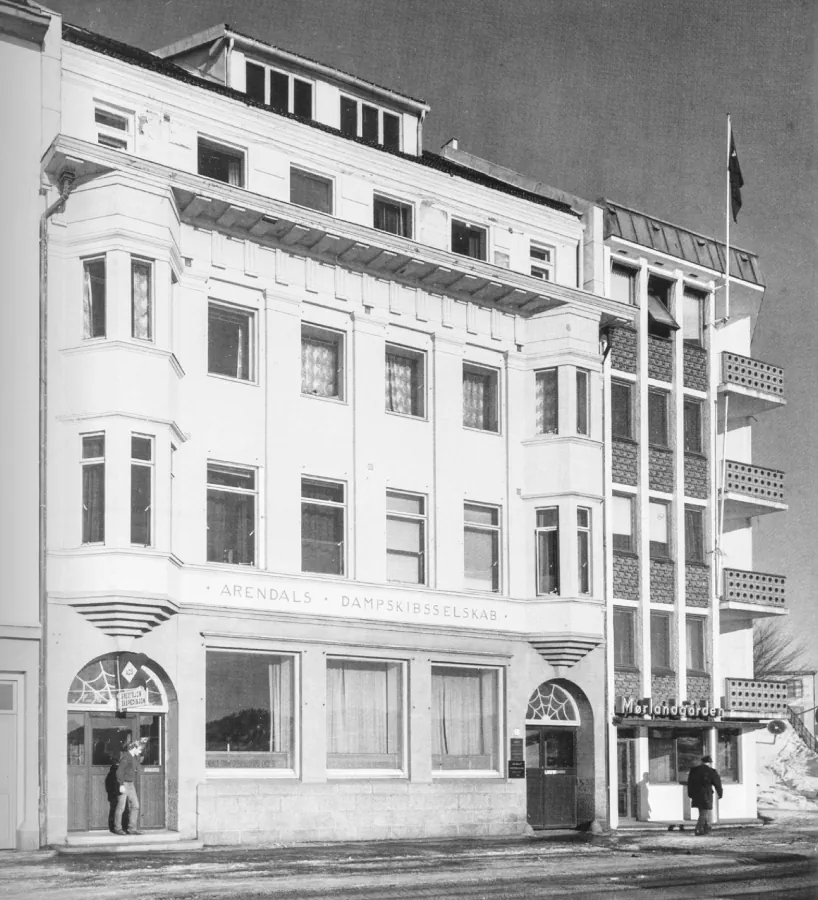
In 1922–1924, an imposing new four-storey headquarters was built on the company’s own plot at Langbryggen (the Long Wharf) in Arendal, with expedition halls on the ground floor, offices on two full floors, and a director’s residence at the top.

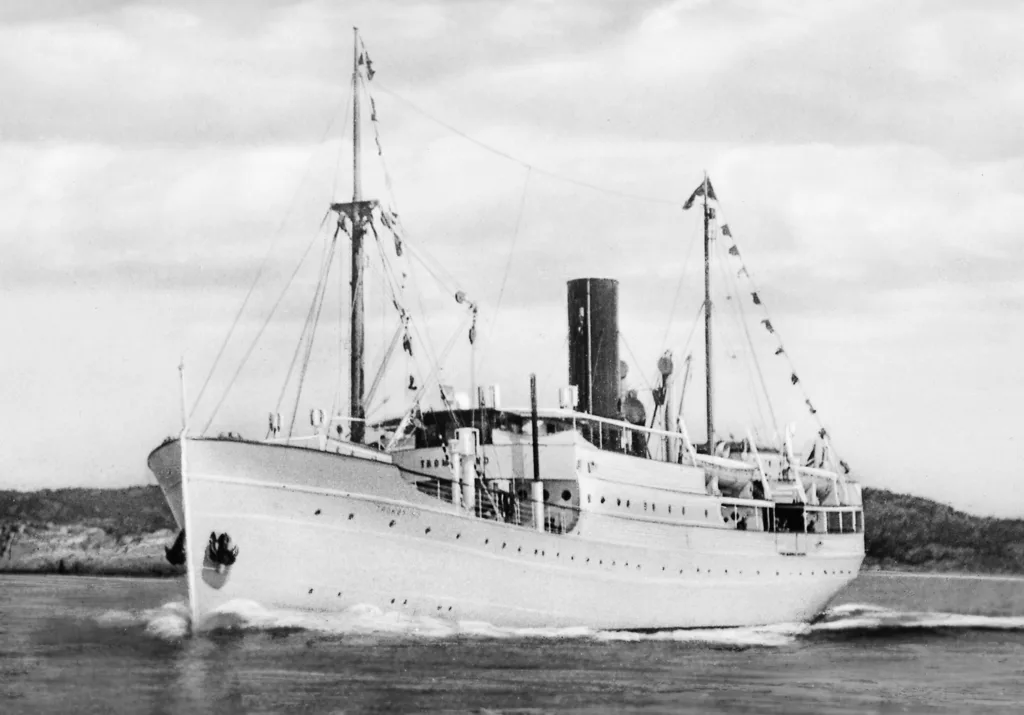
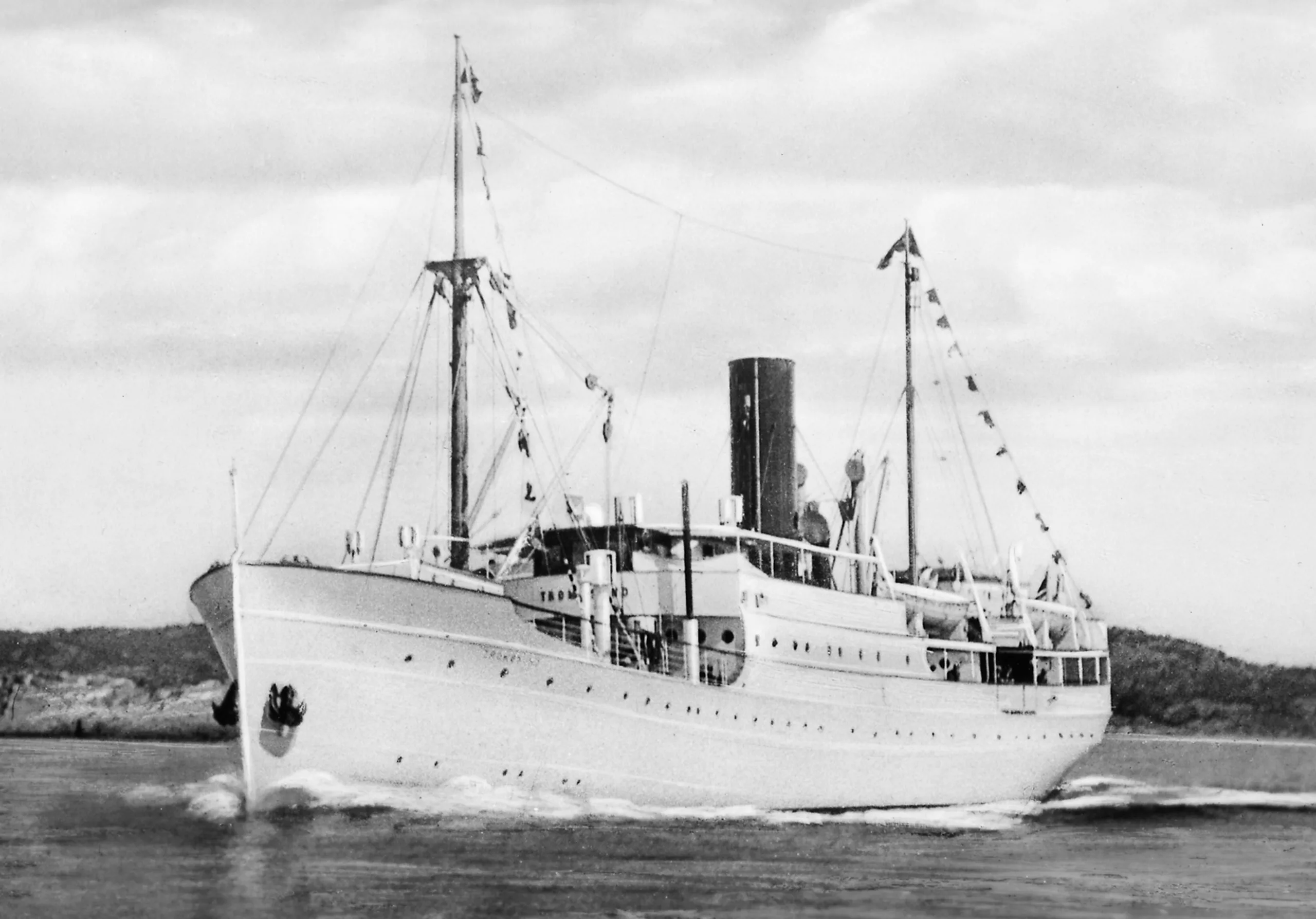
The fleet expanded with two major newbuildings: SS Tromøsund (732 gross tons) in 1928 and SS Oslo (882 gross tons) in 1929, both from Nyland’s Mechanical Workshop in Oslo. Together they cost 1.5 million kroner and were financed almost entirely without loans. Oslo was regarded as perhaps the finest ship ADS ever had, and represented the culmination of the classic coastal passenger vessel.


Arendal Dampskibsselskabs office at Langbrygga
SS Kristiansand taking on passengers in Oslo
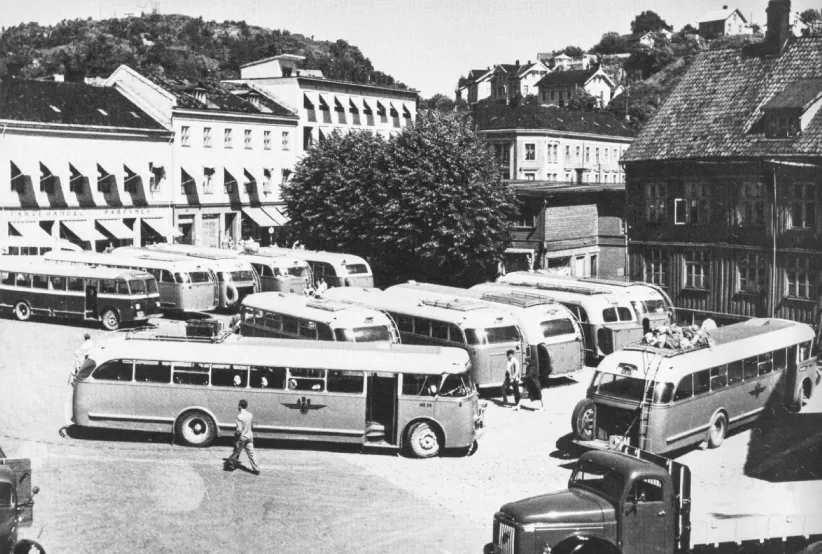
Busses seen in Arendal city
1927

ADS Becomes a Bus Operator

In 1919, the Swedish-born sailor Axel Norén had started bus services in Arendal, steadily expanding until he ran a connected route between Kristiansand and Stathelle by 1923. Norén was a pioneer – in 1926 he began snow-ploughing roads with his vehicles, enabling year-round bus operations. ADS watched with growing concern as Norén’s buses took traffic from both the Brevik route and the night express. In October 1927, ADS acquired Norén’s entire operation for 225,000 kroner: 13 buses with seating for 180 passengers, plus a garage and workshop facility at Strømsbo.

By 1939, the fleet had grown to 23 buses with 413 seats plus four lorries, covering over a million kilometres and carrying 450,000 passengers annually. ADS never regretted becoming a bus operator – it proved one of the most far-sighted decisions in the company’s history.

Busses seen in Arendal city
1935

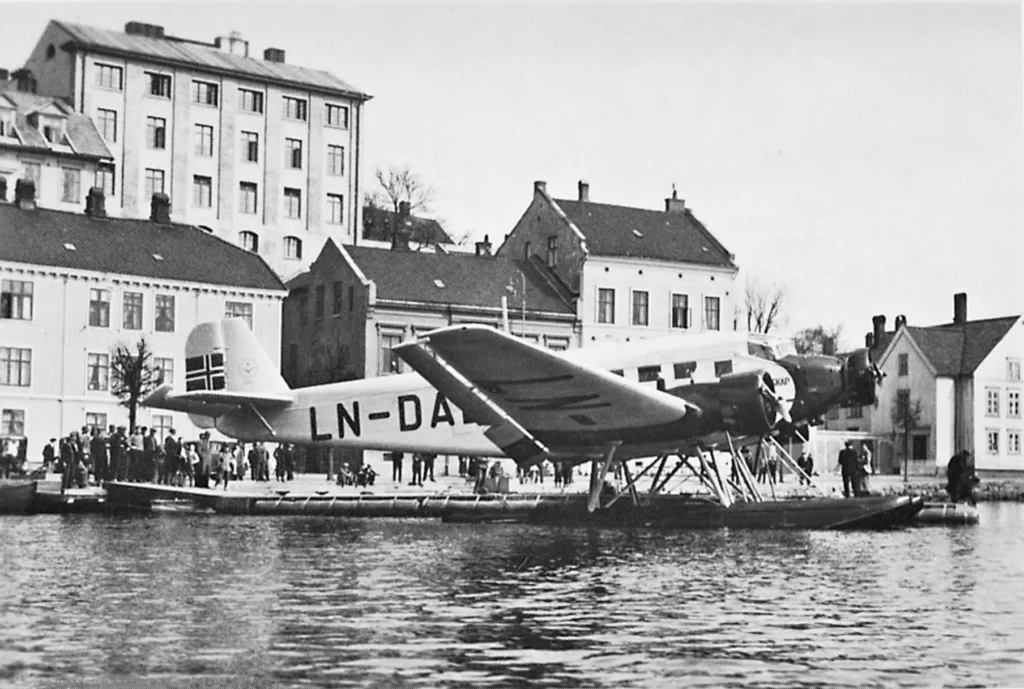
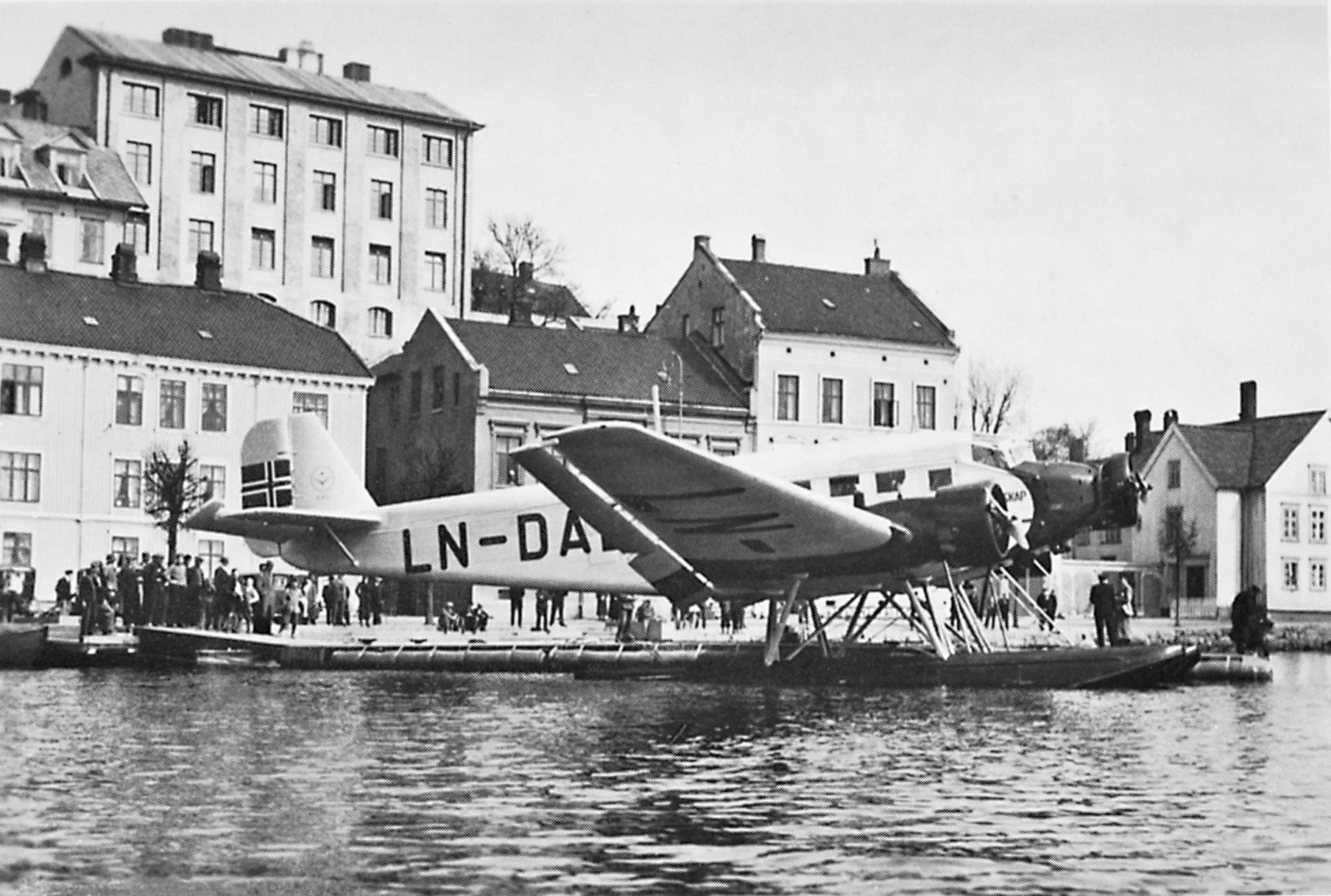
Taking to the Skies – The Seaplane Service

Always looking for new ways to connect Sørlandet with the wider world, ADS joined forces with Bergenske and Fred Olsen & Co in Det Norske Luftfartsselskap (DNL) to operate a seaplane service. From 1935 to 1939, Junkers Ju 52 floatplanes connected Arendal with Oslo and Bergen during the summer months, with ADS serving as local agent. Over four seasons, the company handled almost 1,300 departing and nearly 1,000 arriving passengers by air. When DNL decided to transition to land-based aircraft, the Arendal stop was discontinued and ADS sold its share. A short-lived but remarkable chapter.

Sea-plane on water in front of Tyholmen
SS Brevik
1935

The Railway Reaches Arendal – End of the Brevik Route

The steady advance of the Sørland Railway brought an end to the Brevik route that had been Sørlandet’s fastest link to the capital for decades. The railway reached Kragerø in December 1927, already affecting traffic. In 1934, the eastern terminus was moved to Kragerø, and the route was reduced to the veteran steamer Brevik (the rebuilt Motala from 1868) alone. When the Sørland Railway opened to Arendal in November 1935, the last chapter was written. Kristiansand’s harbour board paid tribute, writing that the route had been maintained with precision in all seasons and in all weather, with a skill and devotion that deserved the greatest recognition and admiration.

SS Brevik
1940

War Comes to the Coast

In the summer of 1939, ADS had seven ships in active service for the last time: Dronningen, Kong Oscar II, Bjørgvin and Oslo in the Bergen coastal route, and Galtesund, Kristiansand and Tromøsund in the night express.

When Germany invaded Norway on 9 April 1940, SS Kristiansand found herself in the middle of the battle at Oscarsborg fortress as the German cruiser Blücher was sunk – but she escaped unscathed. SS Kong Oscar II was leased to the Navy as a barracks ship at Karljohansvern in Horten and was seized by the Germans in April 1940. SS Dronningen was ordered sold to Det Helgelandske Dampskibsselskab in October 1940. SS Bjørgvin was requisitioned, and later sank after a collision off Mandal in October 1941 – she was raised but left as a wreck at Pusnes shipyard for the duration of the war.

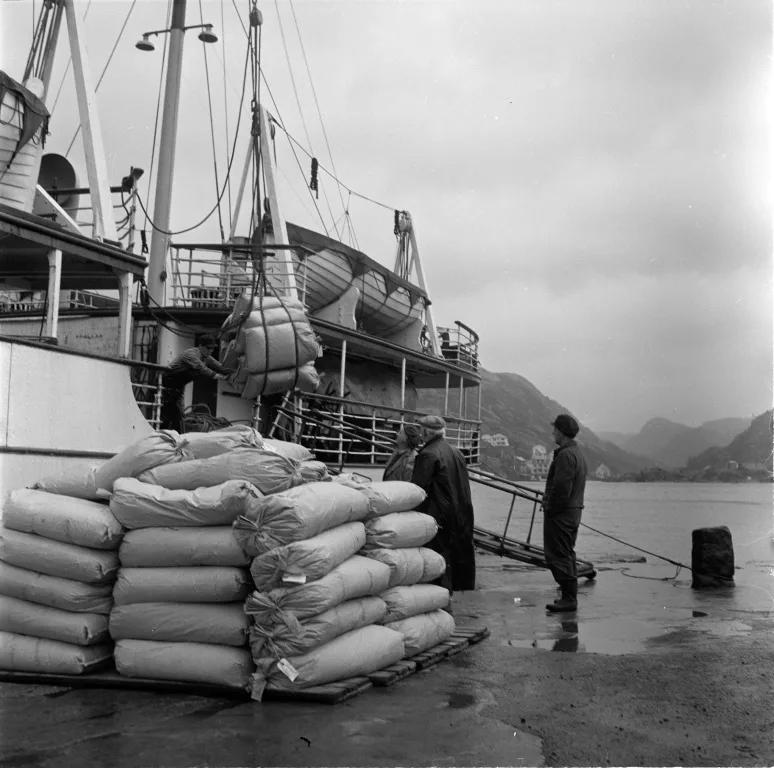
During the occupation, ADS’s coastal ships served a vital role for the civilian population. Goods were nearly torn from the vessels on arrival – sugar, potatoes, flour, margarine, fish, tobacco and other essentials were loaded onto generator-powered trucks and horse-drawn carts and rushed to shops where queues had already formed. The ships were also significantly involved in clandestine resistance activities, transporting wanted men, weapons, ammunition and radio transmitters for the home front.

SS Oslo loading in Regefjord (1953)
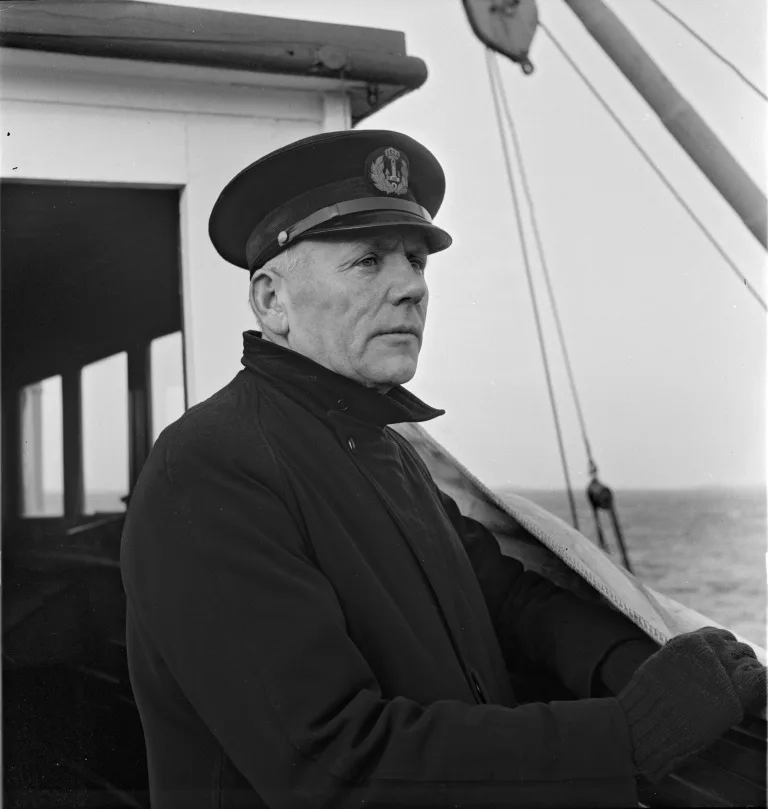
Birger Hansen in 1953
1942

The Hijacking of SS Galtesund

On 15 March 1942, one of the most dramatic episodes in ADS history unfolded. As SS Galtesund sailed northward off Jøssingfjord in a northeast gale, snow squalls and minus 5 degrees Celsius, three armed men from the Norwegian resistance group Kompani Linge – led by Captain Odd Starheim – stormed the bridge and took command. Starheim initially wanted to head straight out to sea, but pilot Birger Hansen calmly pointed out that this would be unwise as the ship would be visible from the German guard posts on shore. He suggested continuing northward to Hådyret before turning west, using a snow squall for cover. Starheim agreed. About three nautical miles west of Rekefjord, the ship set course into the open sea.

After a rough crossing in severe weather, Galtesund arrived safely in Aberdeen on the morning of 17 March. The ship was handed over to the Norwegian government-in-exile (Nortraship) and spent the rest of the war in Allied service – sailing along the British coast and to Iceland, equipped with anti-aircraft guns and a barrage balloon.

Pilot Birger Hansen must take a large share of the credit for the successful outcome of the hijacking.

Birger Hansen in 1953
1943

Tragedy at Sea – The Loss of SS Tromøsund

In early 1943, Captain Starheim returned to Norway with 30 men from Kompani Linge and 10 from the Navy. Their planned operations failed, and an attempt to get a ship from Shetland had to be called off due to bad weather. Starheim resolved to seize a coastal liner instead, and on Sunday 28 February, he and 15 of his men took SS Tromøsund at Rekefjord. The seizure was carried out openly at the quayside, with an exchange of fire with German soldiers escorting the ship. The Germans were therefore immediately alerted.

The weather conditions were as unfavourable as could be: a strong gale from the west-northwest, increasing to storm. Tromøsund made only 6–7 knots as she struggled westward through heavy seas. The weather held through the morning of 1 March, but the ship had not made it far enough from the coast. She was located and bombed by German aircraft. All on board perished: 26 crew members, 2 passengers, and 15 Norwegian commandos – 43 souls in total – including Captain Starheim himself. The remaining members of Starheim’s force later made it back to England in a fishing vessel.

The seizure of Tromøsund was considered reckless and was strongly criticised by many along the coast – particularly by the seafarers of ADS. A lifeboat later drifted ashore on the west coast of Jutland, and several bodies washed up on the Swedish coast. The archive relating to the loss is preserved at KUBEN museum and archive in Arendal.

In January 1945, SS Kong Oscar II – which had been under German control throughout the war – was sunk off Sandnessjøen. She went down with a German crew; ADS had nothing to do with the ship at that point.

SS Tromøsund
SS Tromøsund
SS Bjørgvin in 1949
Jacobsen og Aaby på Bjørgvin
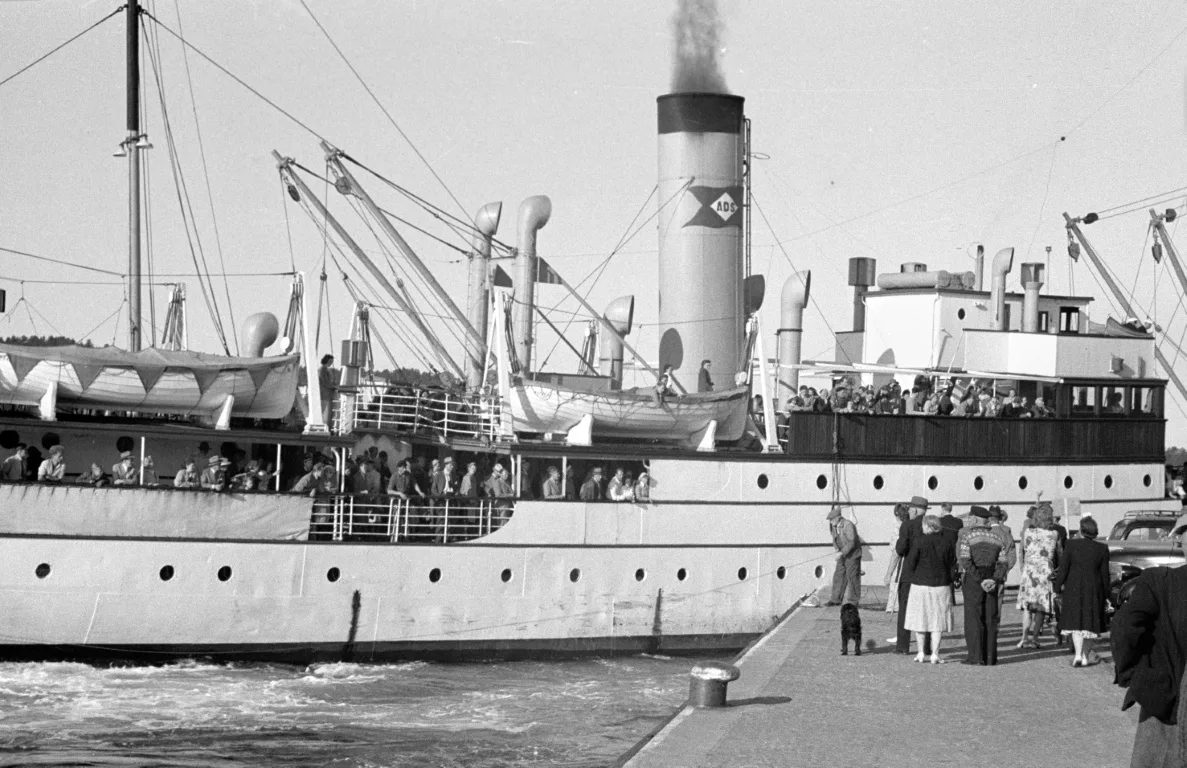
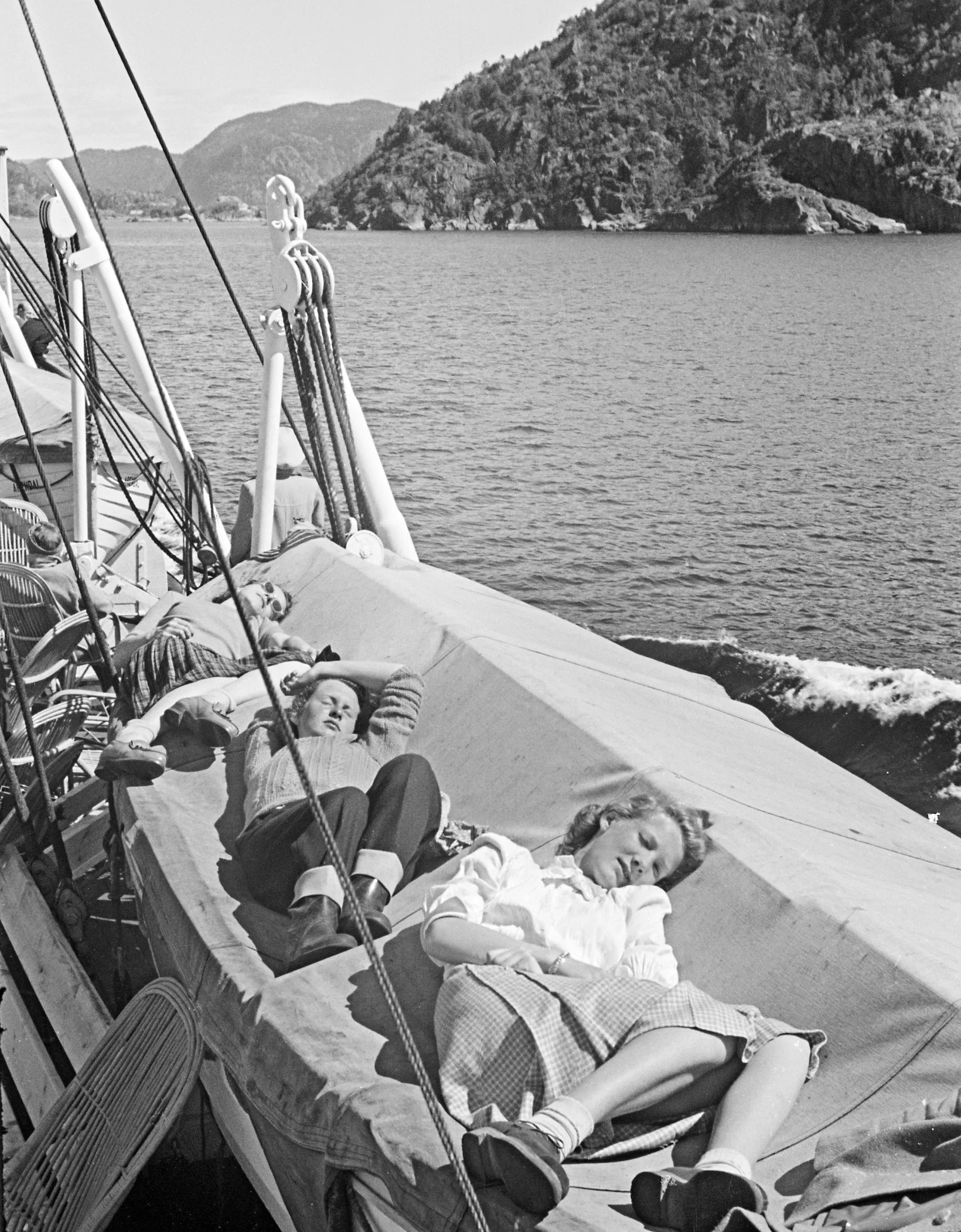
Lifeboats was used for more than safety
1945

Rebuilding After the War

At war’s end, ADS had just four remaining ships: SS Oslo and SS Kristiansand in lay-up, SS Bjørgvin as a wreck at Pusnes shipyard since 1941, and SS Galtesund still in Britain. Director Halvor Løvold – who had led ADS since 1907 – retired and was succeeded by Thorleif Thorsen, who in turn was followed by Ralph Dahlen in 1964.

The share capital was doubled to 1.6 million kroner. Around 30 June 1945, SS Oslo made the first post-war departure from the Akershus quay in Oslo, followed by Galtesund a week later. Bjørgvin underwent a remarkable transformation at Pusnes: the ship was hauled up on the slipway, cut in two, lengthened by 20 feet, and completely rebuilt with a new superstructure, new bow and new interior. The original 1910 triple-expansion steam engine was retained but converted to oil firing. When delivered in May 1947, she was virtually a new ship.

All four surviving steamers were modernised and converted from coal to oil firing in the post-war years – ending the era of heavy manual stoking that had been the toughest work aboard the coastal vessels.

SS Bjørgvin in 1949
1955

A Ship Named Shackleton

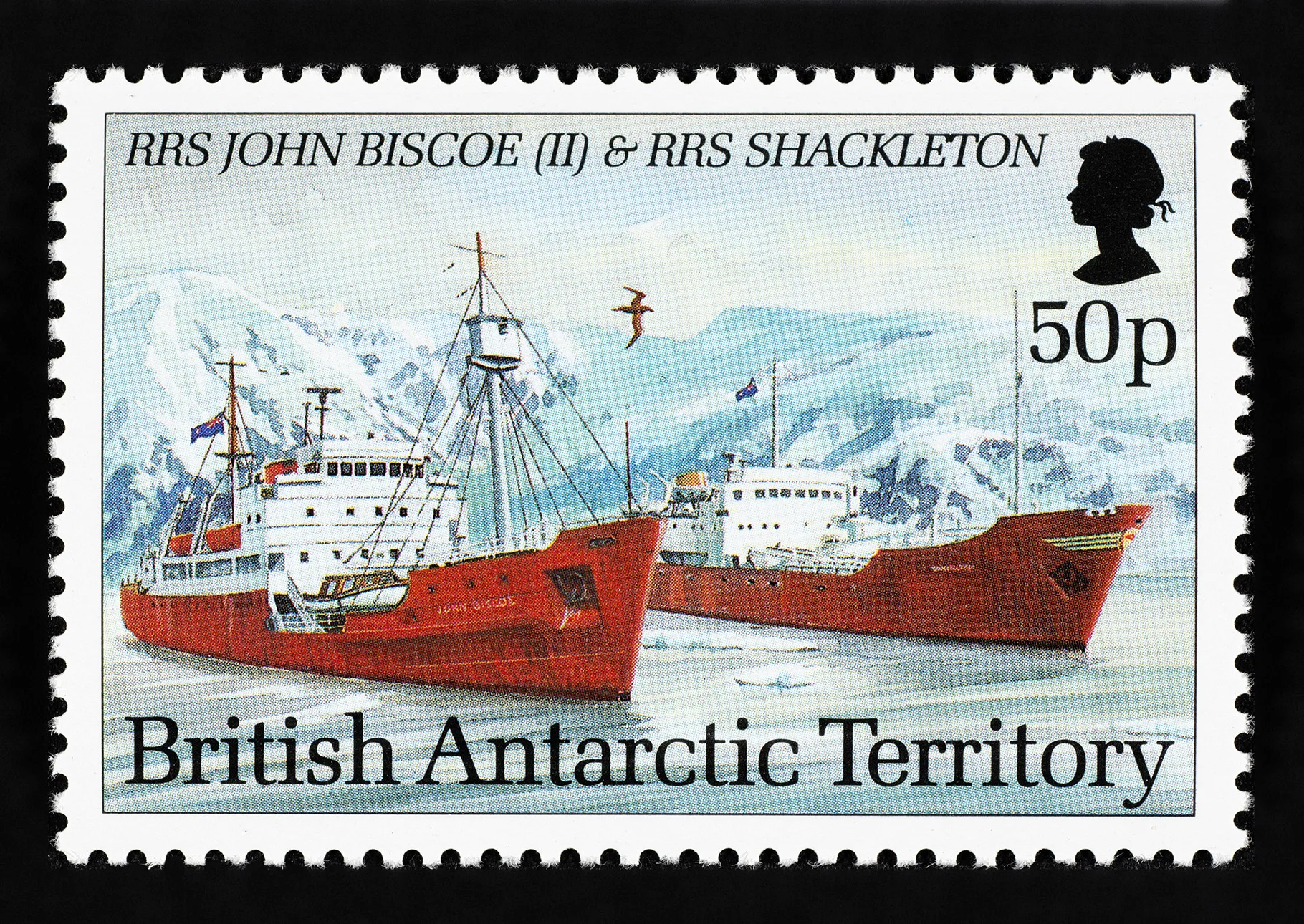
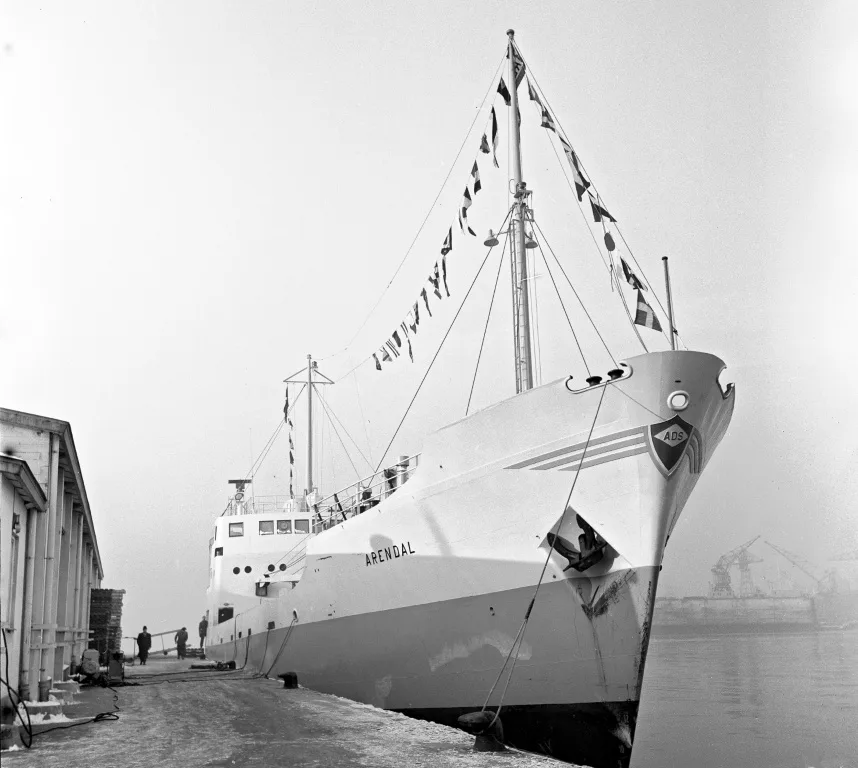
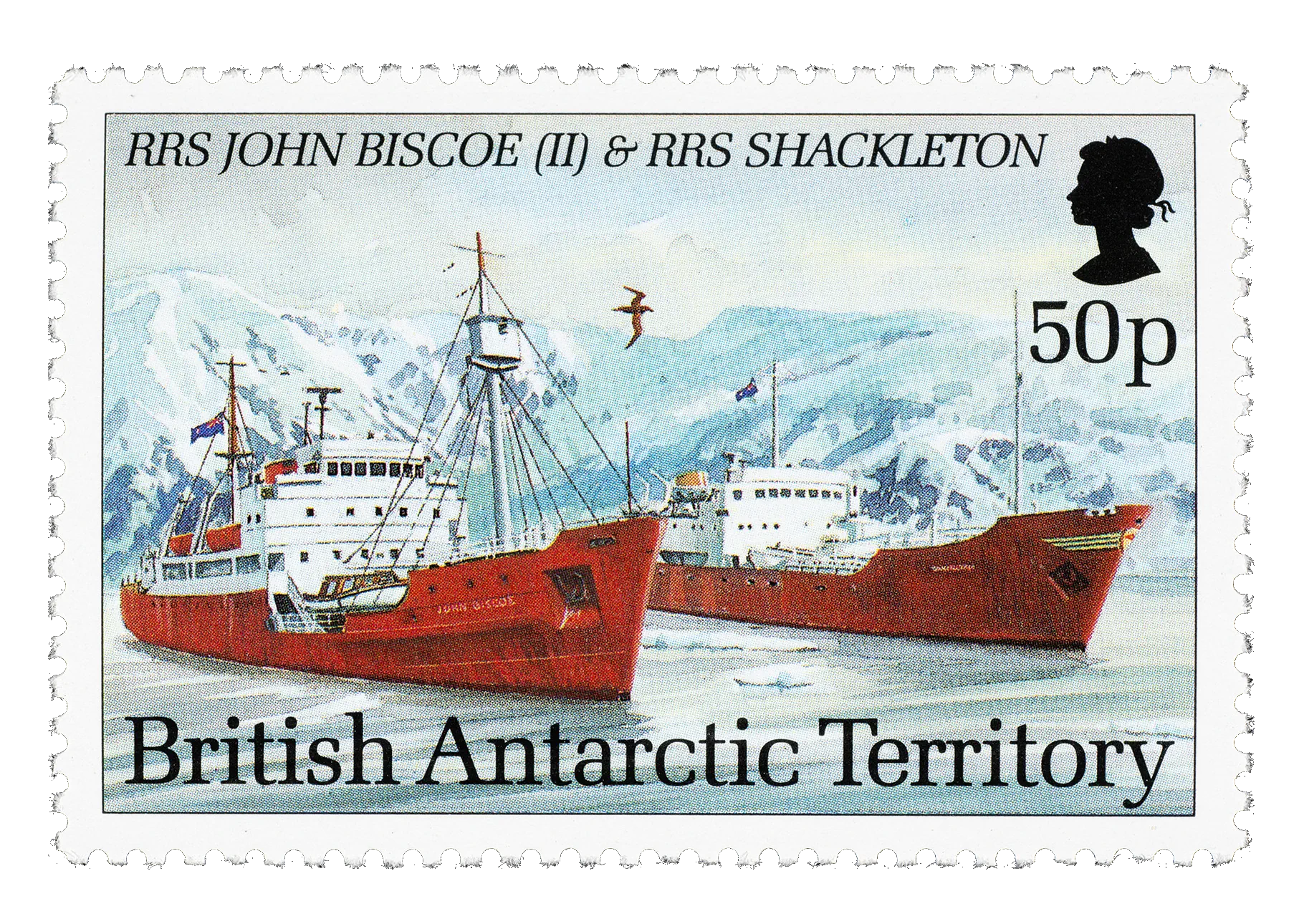
In February 1955, ADS took delivery of a new type of vessel: MV Arendal (605 gross tons) from Sölvesborg shipyard in Sweden – the company’s first motor ship, designed with McGregor hatches, movable cranes and modern cargo handling. She was presented as the most modern coastal vessel in Norway. However, the ship proved less suited to the route than hoped: the engine was too weak, the hatches too narrow, and the 10 passenger berths too few. When the British government made an attractive offer, ADS sold her that same year at a significant profit.

Renamed RRS Shackleton, the former MV Arendal went on to serve as a research vessel in the Antarctic for the Falkland Islands Dependencies Survey (later British Antarctic Survey) from 1955 to 1969, and continued under other names until finally scrapped in Hull in 2011. The Falkland Islands issued a commemorative stamp in her honour in 1983.

MS Arendal (1955)
MS Arendal (1955)
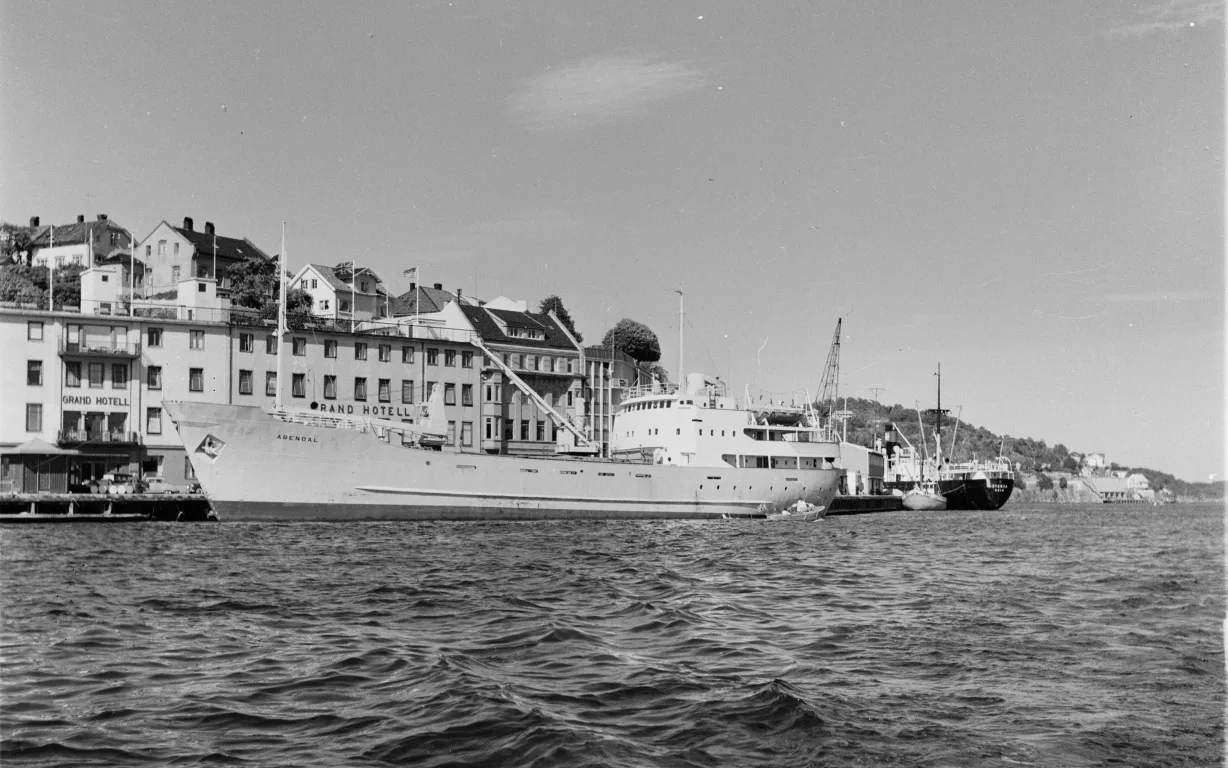
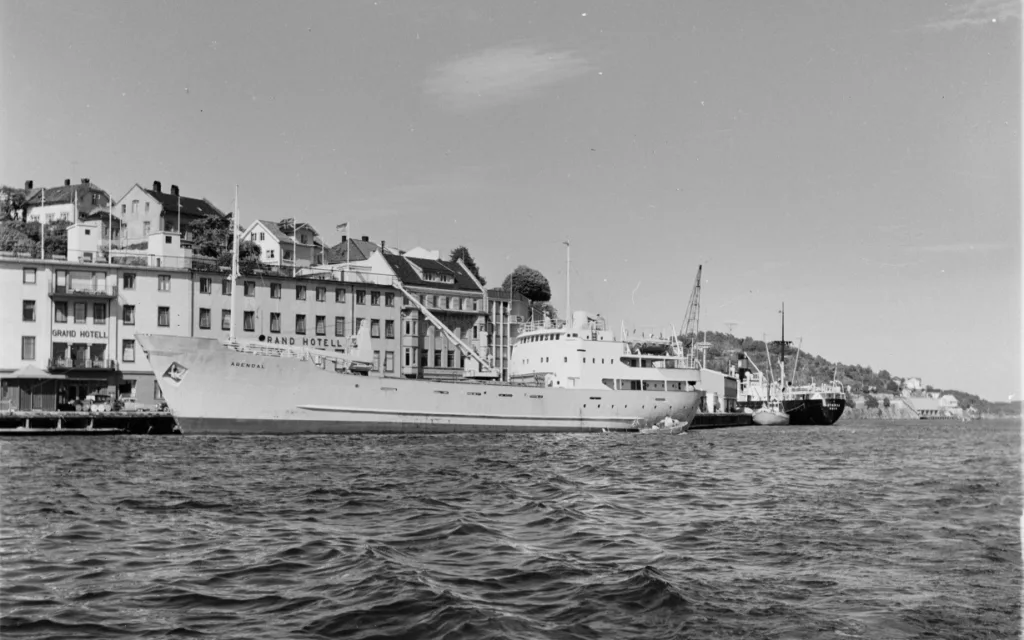
MS Arendal docked at Langbrygga in Arendal
Loading cranes in operation
1957

A New MS Arendal and 100 Years of Service

The substantial profit from the sale was reinvested in a new MS Arendal (678 gross tons), built at Pusnes Mechanical Workshop on Tromøya and delivered in June 1957. Slightly larger than her predecessor, with accommodation for 30 passengers and improved hatches for deck cargo, she proved far more successful. Her delivery coincided with the company’s centenary – a hundred years of coastal shipping from Arendal.

With the new ship in service, the ageing steam fleet was gradually retired. SS Galtesund, 50 years old, was sold in 1955. SS Kristiansand, 42 years old, was sold in 1957. SS Oslo, 30 years old, followed in 1959 – ending the passenger night express between Oslo and Sørlandet.

MS Arendal docked at Langbrygga in Arendal
1960

Loss of the Bjørgvin

In May 1960, SS Bjørgvin ran aground for the third time in her eventful career – this time on Blytampgrunnen near Tønsberg in fog while on the eastbound coastal route. No lives were lost, but the ship sank and was not salvaged. It was the end for a vessel that had served ADS for half a century under two names (Norge and Bjørgvin) and survived a grounding, a collision, a wartime wreck, and a complete reconstruction.

Boarding SS Bjørgvin
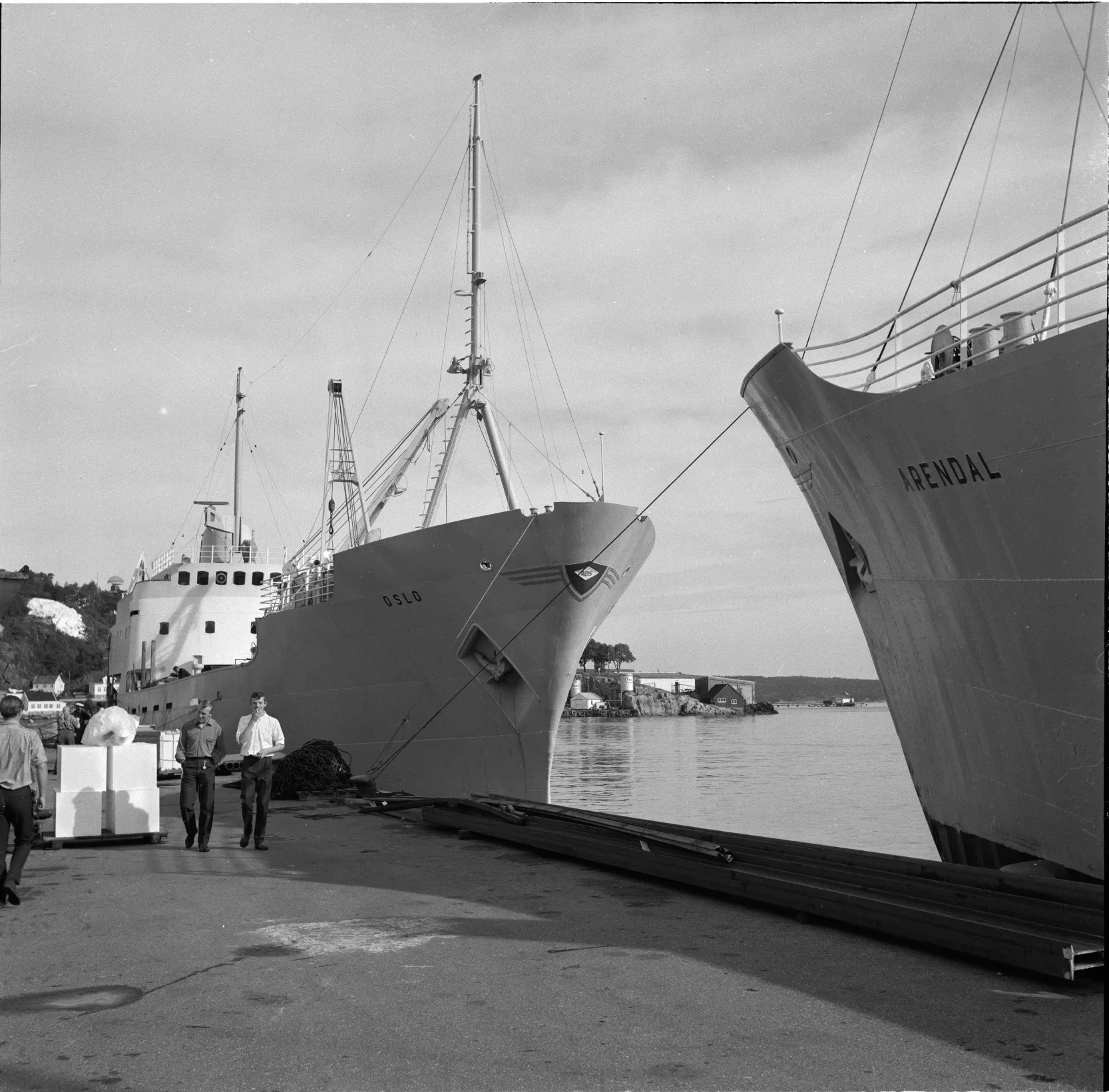
MS Oslo
MS Arendal and MS Oslo docked in Risøra
1962

MS Oslo – The Final Newbuilding

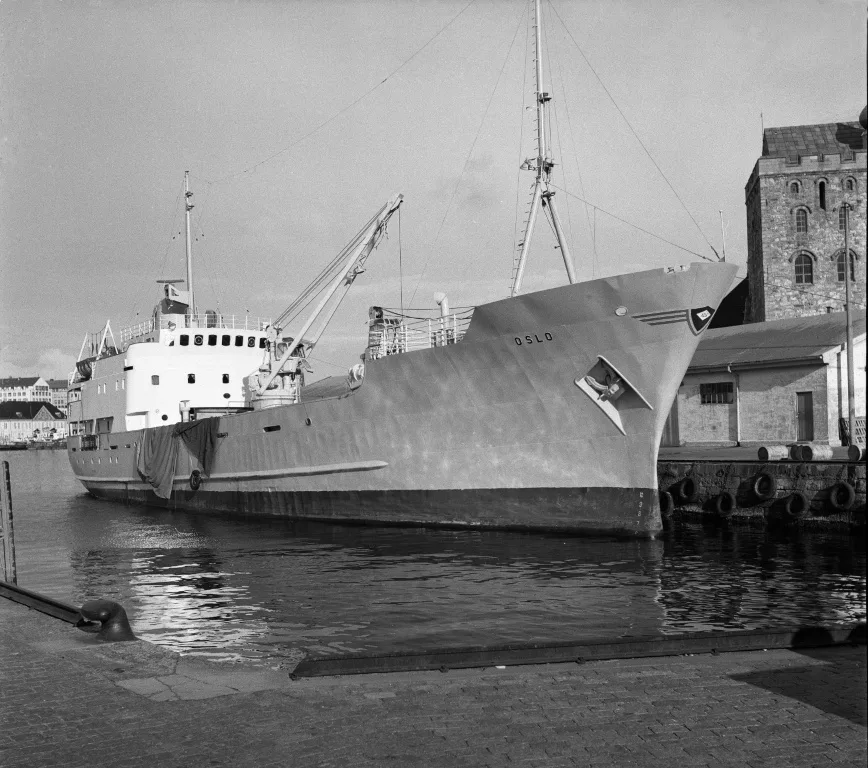
ADS ordered its last ship from Mjellem & Karlsen in Bergen: MS Oslo (727 gross tons), delivered in January 1962. A modern combined cargo and passenger vessel with 34 berths and accommodation for up to 250 passengers in coastal waters, she featured a bulbous bow – believed to be the first on a small Norwegian ship. Together with MV Arendal, she represented some of the most modern and efficient vessels on the Norwegian coast.

But even modern ships could not compete with road transport. Cargo volumes declined while operating costs – particularly wages and social costs – rose steadily. In 1963, the annual government subsidy of 330,000 kroner was withdrawn, and ADS had no choice but to wind down the coastal service.

MS Oslo
1969

The End of 111 Years at Sea

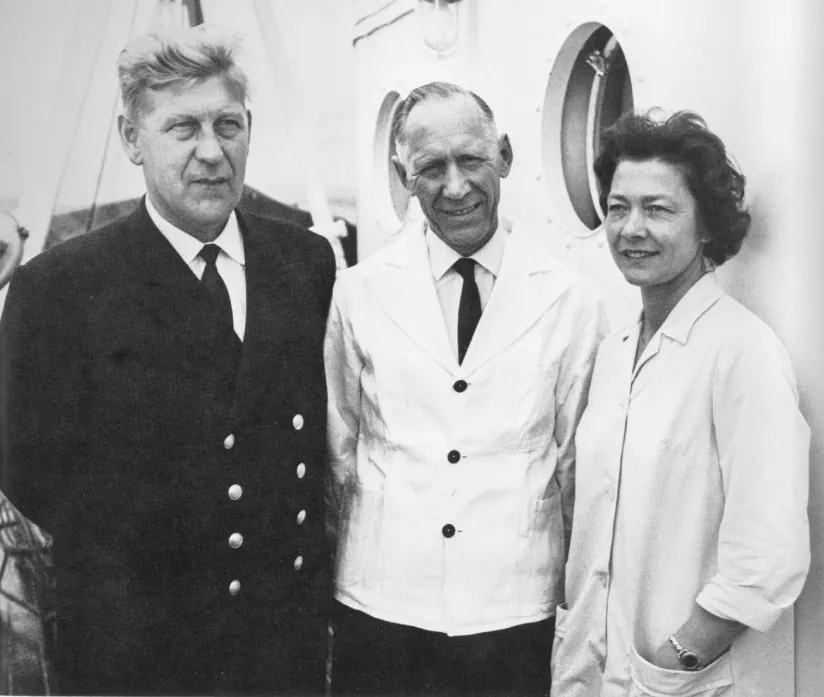
MV Arendal was sold to Senegal in 1967. After the summer season of 1969, the last vessel under ADS flag – MV Oslo – completed her final round trip. On 15 October she arrived in Oslo after her last voyage. The following day, Captain Trygve Henriksen – the last captain in ADS service – handed the ship over to her Canadian buyers, Maritime Agencies Inc. of Quebec. At that moment, 111 years of continuous coastal shipping from Arendal came to an end.

The author of the anniversary book, Birger Dannevig, reflected on what would be remembered longest about ADS’s coastal service: it was the human element – the service from officers, crew and restaurant staff that created an atmosphere the travelling public would never forget.

The capital from the sale of the coastal ships was invested in shares in two overseas vessels: the bulk carrier Jessie Stove (110,343 DWT, built 1972) and the ore/oil carrier Sandefjord (127,209 DWT, built 1974).

Capt. Trygve Henriksen with restauranteur Gustav Sørgensen and wife
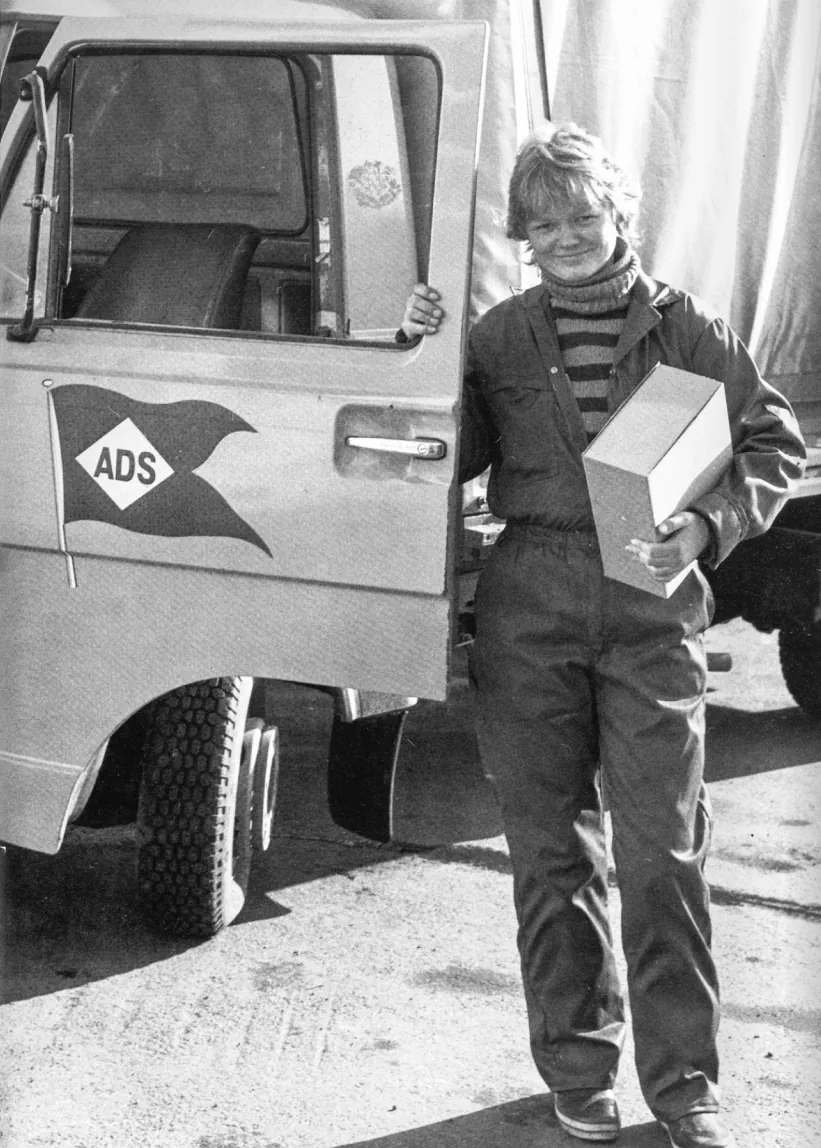
Anne Berit Skjulestad
1970s–1980s

From Sea to Land – A Transport Company

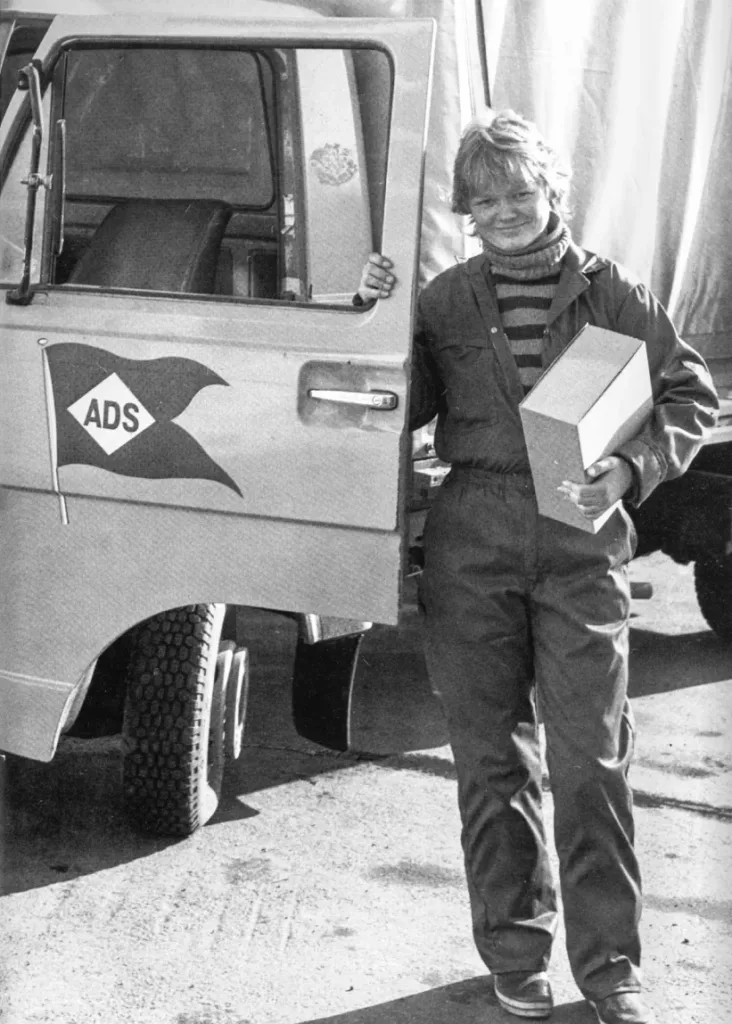
With the end of coastal shipping, ADS transformed itself fully into a land-based transport company. The bus operations, which had begun modestly with Axel Norén’s 13 buses in 1927, grew into a major regional enterprise. Through a series of acquisitions – Hisøy route (1952), Arendal–Austre Moland (1966), Lillesand–Flaksvand (1966), Fevik route (1969), Tromøy route (1974), and Rygene route (1977) – ADS built a dominant position in Aust-Agder.

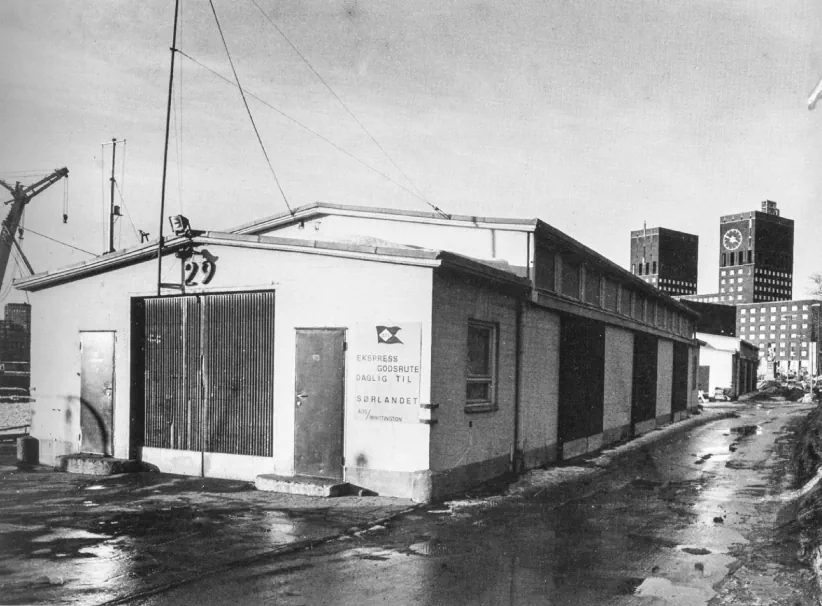
By the early 1980s, the company employed approximately 300 people – as many as when the coastal fleet was at its peak. It operated 111 vehicles and 13 trailers, drove some 5 million kilometres annually, transported over 4 million passengers and 80,000 tonnes of freight. In 1968, ADS had opened a travel agency, and that same year pioneered container freight in partnership with Norwegian State Railways (NSB), establishing the “Godsekspressen” (Goods Express) service.

New service workshops were built at Møglestu in Lillesand (1980) and Strømsbo in Arendal was substantially expanded (1982) – representing investments of some 15 million kroner.

Anne Berit Skjulestad
1986

The Company Splits

In the autumn of 1984, the Oslo company SSB Invest AS acquired a majority stake in ADS. In February 1986, the company was divided. The transport operations – buses, freight, travel agency – continued as Aust-Agder Trafikkselskap AS, with the Norwegian State Railways (NSB) taking 45 per cent and Aust-Agder County Council 16.4 per cent. This entity is the direct predecessor of today’s Nettbuss Sør.

The shipping interests – including shares in the overseas vessels Sandefjord and the cruise ships Sea Goddess I and II, as well as the office building at Langbryggen 21 – were transferred to a new entity that retained the historic name Arendals Dampskibsselskab. The following year, the majority was sold to Mørland Invest AS, returning the ownership to Arendal.

ADS terminal in Oslo
2008

A New Chapter – ADS Reactivated

After years of relative dormancy, ADS was acquired and reactivated by its current owners, led by Bjørn Tore Larsen – the founder of OSM Maritime Group in Arendal. Under new leadership, the historic company was given a modern purpose: managing shipping and offshore projects and investments on behalf of its shareholders and third parties, with the aim of building long-term value through strategic management and financial expertise.

2007–2014

The "K" Line Offshore Partnership

In 2007, ADS entered into a partnership with Japanese shipping giant Kawasaki Kisen Kaisha Ltd. (“K” Line) to establish K Line Offshore AS (KOAS) in Arendal. The aim was to build a high-end offshore service vessel company. With investments of approximately USD 600 million, the company took delivery of a series of six AHTS and PSV vessels and also acquired second-hand tonnage. In 2014, the partnership was amicably dissolved, with the fleet continuing under “K” Line’s full ownership and OSM continuing as technical manager.

2012

AET Sea Shuttle – Pioneering Energy Efficiency

ADS partnered with AET – one of the world’s leading petroleum and chemical tanker owners – to establish AET Sea Shuttle AS. The company owns specialist DP2 offshore loading shuttle tankers on long-term charters to Equinor, operating in the North Sea. Part of the fleet runs on LNG dual-fuel solutions for main and auxiliary engines, making them among the most energy-efficient shuttle tankers in the world.

2018

ADS Maritime Holding – Listed on Euronext Growth

ADS Maritime Holding Plc was established as a shipping investment company and listed on the Euronext Growth Oslo Stock Exchange. Managed by ADS, the company focuses on counter-cyclical investments in the shipping sector – carrying forward the entrepreneurial spirit that has defined Arendals Dampskibsselskab since a small paddle steamer first arrived in Arendal in the summer of 1858.

Today

From Paddle Steamer to Global Shipping

From a small paddle steamer on the Sørlandet coast to modern shipping investments and offshore partnerships – Arendals Dampskibsselskab has navigated wars, financial crises, technological revolutions and the fundamental transformation of Norwegian coastal transport. Through it all, the company has remained rooted in Arendal, carrying forward a maritime tradition that stretches back to 1857.

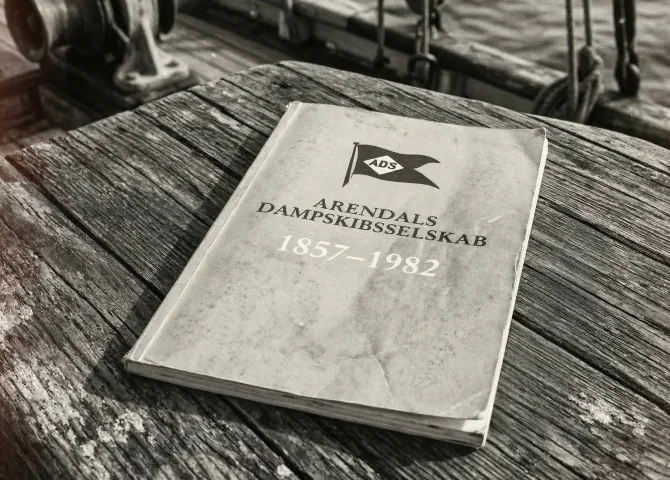
Anniversary book

To celebrate the company’s 125th anniversary, in 1982 ADS published a book providing a review of ADS’s development from 1857 up until then. Please feel free to browse a digital version of the book here.